
7 Best Softwares to Recover Deleted Files from SD Card

Ever pulled out your SD card only to realize your files are gone? Maybe you accidentally deleted photos, formatted the card, or the system just can’t read it anymore. Whatever the case, it’s a gut-punch—especially when those files matter. The good news? You’re not out of luck. In 2025, recovering deleted files from an SD card is way easier than it used to be. Thanks to smarter, faster, and more user-friendly software, even beginners can recover deleted files from SD card with just a few clicks. We’ve rounded up the best SD card recovery tools this year—some are free, some are pro-level, and all of them are tested. Whether you’re dealing with a corrupted memory card or a simple mistake, this guide will help you pick the right tool and recover deleted files from SD card without the stress.
Top SD Card Recovery Tools in 2025
With dozens of recovery tools available online, it can be overwhelming to choose the right one. That’s why we’ve handpicked the top SD card recovery software in 2025 based on performance, ease of use, and supported features. Whether you’re a beginner looking for a simple interface or a pro who needs advanced capabilities, there’s something here for you. Let’s dive into the top tools that can help you recover deleted files from SD card with ease.
#1. WinfrGUI-Best Free Recovery Tool for Everyday Use
- Supported File Types: Photos, videos, documents, music, and more
- Operating System Compatibility: Windows 10 (version 19041.0 or higher), Windows 11
- File System Support: NTFS, FAT, exFAT, and ReFS
If you’re looking for a free and beginner-friendly solution to recover deleted files from SD card, WinfrGUI should be your first stop. Unlike the original command-line Windows File Recovery developed by Microsoft, WinfrGUI transforms the process with a clean, intuitive graphical interface. No technical skills required—just launch the tool, select your SD card, and start scanning.
What’s new in 2025? This year, WinfrGUI has received several upgrades, including:
- Advanced Scan Filtering – Easily narrow down results by file type or modification date
- Built-in Backup Tools – Secure your recovered files right away
- Quick Clean Option – Wipe leftover clutter after recovery
Why Choose WinfrGUI?
- ✅ Reliable results even on older or damaged memory cards
- ✅ 100% free—no hidden fees or upgrade nags
- ✅ Streamlined interface with zero learning curve
- ✅ Offers both Quick Scan (for recently deleted files) and Deep Scan (for corrupted or formatted SD cards)
#2. Recuva-Lightweight and Beginner-Friendly Recovery Tool
- Supported Files: Common document, photo, video, and audio formats
- OS Support: Windows 11/10/8.1/7
- Supported File Types: Common photo, video, document, and audio formats (e.g., JPG, MP4, DOC, MP3)
- Operating System Compatibility: Windows 11, 10, 8.1, 7
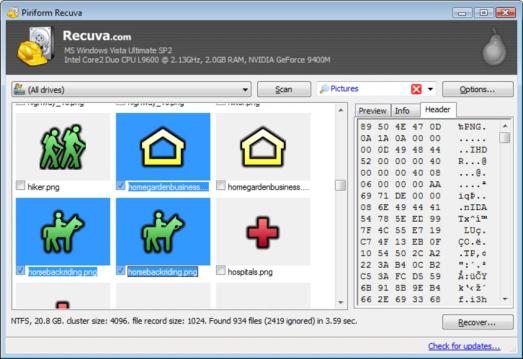
If you’re just getting started with file recovery, Recuva is a simple and approachable choice. Developed by the makers of CCleaner, it’s known for its small file size, fast scanning, and ease of use. Whether you’ve accidentally deleted photos or removed files from the Recycle Bin, Recuva offers a straightforward way to recover deleted files from SD card.
How it works? Recuva uses a helpful step-by-step wizard to guide you through recovery. You can choose the file type, target location (such as an SD card), and let the software perform a quick or deep scan based on how recently the data was lost.
Extra Features:
- Secure Overwrite (Military-grade) – Permanently delete sensitive files to prevent future recovery
- Deep Scan Mode – Useful for files deleted a while ago or after formatting
Best For:
- ✅ Casual users who want fast, no-fuss recovery of recently deleted files
- ✅ Those needing a lightweight tool that won’t slow down older PCs
Keep in Mind:
- Recuva has not received major updates in 2025
- It supports fewer file formats than advanced tools
- No version available for macOS or Linux users
It’s lightweight and intuitive, offering quick undelete capabilities. Although it hasn’t had major updates in 2025, its secure overwrite and wizard-based recovery make it a practical tool for basic file recovery.
#3. R-Studio (Windows, macOS, Linux)

- Supported File Types: Hundreds of file formats, including RAW image types (CR2, NEF), videos, documents, emails, and more
- Operating System Compatibility:
- Windows: 11, 10, 8, 7
- macOS: 10.6 and later
- Linux: Most modern distributions supporting
.rpmor.debpackages
If you’re facing complex data loss—like a corrupted SD card, broken partitions, or even RAID array failures—R-Studio is one of the most powerful tools available in 2025. Designed primarily for data recovery professionals and IT technicians, it goes far beyond basic scanning.
What sets R-Studio apart? It includes specialized features such as:
- RAID Reconstruction – Restore files from damaged or non-functional RAID configurations
- Hexadecimal File Preview & Editing – Useful for forensic or deep-level recovery
- Network Recovery – Recover data from remote systems over a LAN or WAN
- Extensive File System Support – Including FAT, exFAT, NTFS, ReFS, HFS, APFS, Ext2/3/4, and more
Recovery Capabilities: R-Studio can scan damaged SD cards even when the file system is unreadable or missing. This makes it ideal for recovering photos and videos from RAW partitions, formatted media, or physically degraded cards.
Best For:
- ✅ IT pros, digital forensics experts, and advanced users
- ✅ Situations where free tools fail to recover lost or damaged files
Limitations to Note:
- The free version only allows recovery of files up to 256 KB
- Full access to advanced features requires a paid license
#4. EaseUS Data Recovery Wizard (Windows, macOS)
- Supported File Types: 1,000+ formats including photos, videos, Office documents, emails, archives, and more
- Operating System Compatibility:
- Windows: 7, 8, 10, 11
- macOS: 10.13 to macOS 13 (Sonoma Beta supported in 2025)
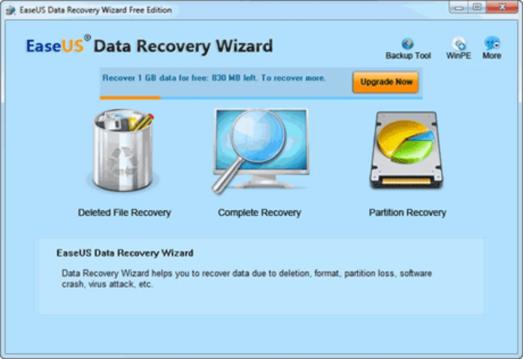
If you’re looking for a balance between advanced features and a beginner-friendly interface, EaseUS Data Recovery Wizard is a solid choice in 2025. Whether you’re using Windows or macOS, this software simplifies the process of recovering lost or deleted files from SD cards, formatted drives, or even lost partitions.
What’s New in 2025? This year, EaseUS introduced several key updates to enhance recovery:
- AI-Based File Filtering – Speeds up locating specific file types from large scan results
- Faster Scan Engine – Reduces recovery time by up to 30% compared to previous versions
- Improved macOS Support – Now compatible with the latest macOS Sonoma Beta
Why It Works Well: EaseUS guides you through recovery with a clean, step-by-step interface. You can scan an SD card for deleted photos, preview results (in the paid version), and restore them in just a few clicks—no tech expertise required.
Best For:
- ✅ Users who want professional-grade recovery tools without the complexity
- ✅ Cross-platform users who frequently switch between Windows and macOS
- ✅ Those recovering files after formatting, virus attacks, or accidental deletion
Limitations to Keep in Mind:
- Free version only supports 2 GB of recovery
- File preview is locked behind a paid license
#5. IObit Undelete (Windows)
- Supported File Types: Common formats for documents, photos, videos, and audio (e.g., .docx, .jpg, .mp4, .mp3)
- Operating System Compatibility: Windows XP, Vista, 7, 8, 10, and 11
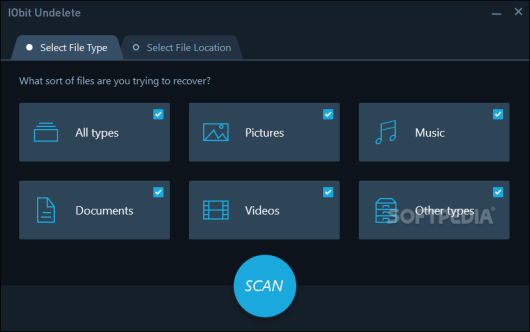
If you’re looking for a simple, plug-and-play solution to recover deleted files from SD card, IObit Undelete may be just what you need—especially for lightweight recovery tasks. As a portable program, it doesn’t require installation and can be launched directly from a USB drive, which is ideal when you’re recovering files on shared or restricted systems.
How It Works: IObit Undelete uses a one-click recovery process to locate and restore recently deleted files from USB drives, SD cards, and hard disks. It’s designed for beginners, with a minimal interface that gets the job done quickly—without technical complexity.
2025 Status: While it hasn’t seen major updates this year, it remains functional and easy to use for small-scale recovery. However, it lacks advanced options like deep scanning or file previews, which limits its effectiveness in more serious data loss situations.
Best For:
- ✅ Users needing quick recovery of recently deleted files from USBs or SD cards
- ✅ People who prefer a portable, no-installation tool
Limitations:
- No deep scan mode, which means it might miss older or fragmented files
- No preview feature, making it harder to verify files before recovery
- Slower scan performance compared to other tools in this list
#6. MiniTool Power Data Recovery (Windows)
- Supported File Types: 100+ formats including documents, videos, photos, audio files, and archives
- Operating System Compatibility: Windows 7, 8, 10, and 11
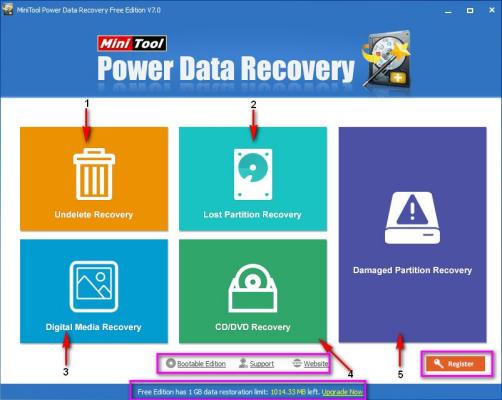
In 2025, MiniTool Power Data Recovery has taken a step forward with a modernized user interface and improved usability. The latest version now includes enhanced file previews and location-specific recovery, allowing users to target folders like the Desktop, Recycle Bin, or even lost partitions—perfect for pinpointing important files without scanning the entire drive.
What’s Improved in 2025?
- Faster scan engine reduces wait times
- Smoother file preview feature with thumbnail view
- More intuitive navigation for beginners
Unique Advantage: MiniTool lets you recover deleted files from SD card or hard drives based on folder structure—ideal when you remember where the file was saved but not its name or type.
Best For:
- ✅ Users needing selective recovery from known locations
- ✅ Those who want a clean interface with straightforward recovery steps
- ✅ Beginners who value guided workflows
Things to Keep in Mind:
- The free version is limited to 1 GB of recovery
- Full file previews are only available in the paid version
- Some scans (especially on larger drives) can still be resource-intensive
#7. PhotoRec (Windows, macOS, Linux)
- Supported File Types: Over 480 file extensions spanning 300+ file families (e.g., documents, videos, photos, archives)
- Operating System Compatibility:
- Windows: XP through Windows 11
- macOS: Intel and Apple Silicon (M1/M2)
- Linux: Kernel 2.6 and above
In 2025, PhotoRec remains one of the most powerful and respected open-source solutions for recovering deleted files from SD cards and other storage devices. Bundled with TestDisk, this tool specializes in deep raw recovery, meaning it searches for data based on file signatures rather than relying on a functioning file system.
What Makes It Stand Out ? Unlike many commercial tools, PhotoRec is completely free and highly effective at recovering files from severely corrupted or formatted drives, including FAT, exFAT, NTFS, and ext2/3/4 file systems. Its file carving technique allows it to find files even when the file system is missing or damaged.
However, a Few Things to Note:
- No graphical user interface (GUI) — it operates solely via the command line, which can be intimidating for casual users.
- No file preview, so you must recover the files first to inspect them.
- Requires manual file filtering post-recovery since results are not categorized.
Best For:
- ✅ Advanced users, IT professionals, and Linux users
- ✅ Those recovering from serious file system corruption or accidental formatting
Limitations:
- Not beginner-friendly due to its text-based interface
- Lacks real-time filtering or preview features
- Recovery results may be less organized compared to paid GUI tools
How to Recover Deleted Files from SD Card with WinfrGUI
Here’s how to restore deleted data from an SD card using WinfrGUI:
Step 1: Download WinfrGUI from its official website and install it on your Windows computer by following the simple setup instructions.
Step 2: Plug your SD card into your PC using an SD card reader or USB adapter, and make sure your computer recognizes the card before moving on.
Step 3: Open WinfrGUI and choose your SD card from the list of available drives to tell the program where to look for your lost files.
Step 4: Pick either the Quick Scan if you just deleted files recently or the Deep Scan if your data loss is more serious or your card is damaged.
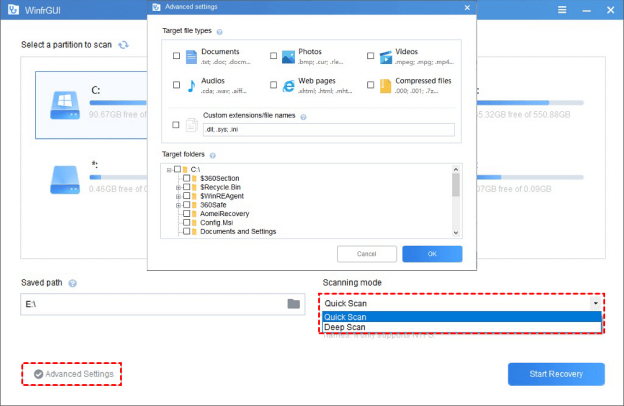
Step 5: Click the scan button and wait while WinfrGUI searches your SD card for deleted or lost files.
Step 6: When the scan finishes, look through the files you can recover, preview them if needed, and pick the ones you want to get back.
Step 7: Save your recovered files to a different location—never on the same SD card—to avoid accidentally overwriting anything you still need to recover.
Always save recovered files to your computer’s internal drive or another external drive to maximize recovery success and avoid further data loss.
Common Causes of SD Card Data Loss
To avoid future headaches, be aware of what causes SD card data loss:
| Cause | Description |
|---|---|
| Formatting | Accidental or forced formatting wipes data unless backups exist. |
| Accidental Deletion | Deleting files without backup remains the most common cause. |
| Corruption | File system errors or OS bugs can render your SD card unreadable. |
| Physical Damage | Bending, overheating, or water damage may cause permanent data loss. |
| Malware Attacks | Infected devices can corrupt SD card contents or delete files silently. |
Prevention Tips:
- Avoid cheap or counterfeit SD cards
- Eject cards properly
- Backup regularly
- Use antivirus software
Final Thoughts
Losing files from your SD card isn’t the end of the world—especially now. With the right recovery software, you can often restore photos, videos, documents, and more in just minutes. In this guide, we’ve covered the top tools of 2025 to help you recover deleted files from SD card, no matter how you lost them. From the free and beginner-friendly WinfrGUI to powerful options like R-Studio and EaseUS, there’s something for every need and skill level. Just one tip: act fast. The longer you wait—or keep using the SD card—the harder it gets to recover your files. So take a deep breath, pick the tool that fits you best, and start scanning. You might be surprised at how much you can get back. Don’t give up on those lost files—chances are, they’re still there, just waiting to be recovered.
🔗 Also Read:
 MyRecover
 FoneTool
