
Complete Guide to Recover Deleted Files on SD Card

SD cards are the tiny workhorses of our digital world, silently storing our most precious memories and critical data from phones, cameras, and drones. Yet, beneath their convenient portability lies a hidden vulnerability: they are highly prone to sudden data loss. Whether it’s an accidental tap of the ‘Delete’ button, a frustrating ‘Card Error’ message, or a corruption that renders the card RAW and inaccessible, the panic of losing hundreds of files is universal. Why does this happen? Unlike robust internal drives, flash memory is susceptible to electrical fluctuations and file system damage, turning a simple storage device into a digital ticking time bomb. But here is the critical fact: lost files are rarely gone forever. When you delete a file, the data remains on the chip until it’s physically overwritten. This “grace period” is your chance to fight back. This complete guide will eliminate the guesswork, showing you exactly how to recover deleted files on SD card and troubleshoot the most common errors before your data vanishes for good.
How to Recover Deleted Files on SD Card Using Software
The quickest, safest, and most effective way to retrieve files lost due to accidental deletion, formatting, or mild corruption is by using reliable data recovery software.
Recommended Tool: WinfrGUI for Free SD Card Recovery
To make the recovery process straightforward and avoid potential complications or further data damage, choosing a specialized, easy-to-use tool like WinfrGUI is highly recommended. This free software is designed specifically for deep scanning and recovering files from flash media like SD cards, ensuring your files are retrieved without compatibility or integrity issues.
Steps to Recover Deleted Files with WinfrGUI:
Prerequisite: Immediately stop all use of the SD card.
Step 1: Setup and Connection
- Download: Download and install WinfrGUI Free on your computer’s hard drive (not the SD card).
- Connect: Insert the SD card into a reader and connect to the PC. Open WinfrGUI; click Reset if needed to ensure recognition.
Step 2: Select and Scan
- Select Drive: Choose the SD card partition (usually marked with a USB drive letter).
- Scan: Click Scan. Do not interrupt the process.
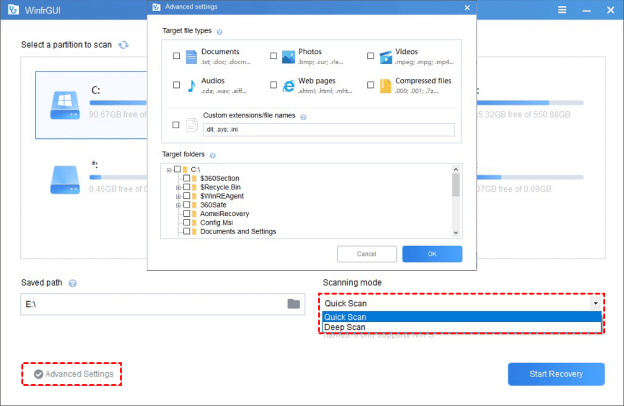
Step 3: Locate Files
- View Results: After the scan, review the list of recoverable files.
- Filter: Use the Type, Filter, or Search functions to quickly find specific files (e.g., filter by JPG, size, or file name).
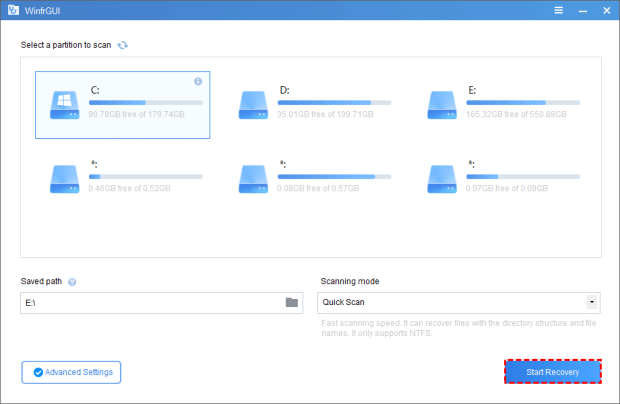
Step 4: Start Recovery and Save Safely
- Destination: Select a new storage location on your computer. DO NOT save files back to the original SD card.
- Start Recovery: Click Save (this initiates the file export). Click OK.
Troubleshooting Common SD Card Errors
Effective SD card troubleshooting often involves diagnosing the specific error. Below are the most frequent problems users encounter and their detailed solutions.
1. SD Card Is Corrupted: Repair and Data Safety
A corrupted SD card will often generate error messages like “The SD card is not formatted,” “Card Error,” or “Cannot read/write to card.” When corruption occurs, your first priority is to recover data from the corrupt memory card using the software in Part 1. Once data is safe, you can attempt repair.
Six Detailed Ways to Fix a Corrupted SD Card:
1. Check Hardware Connections: The issue may lie with the connection, not the card. Test the card using a different USB port, a different card reader, or another adapter to eliminate physical connection failure as the cause.
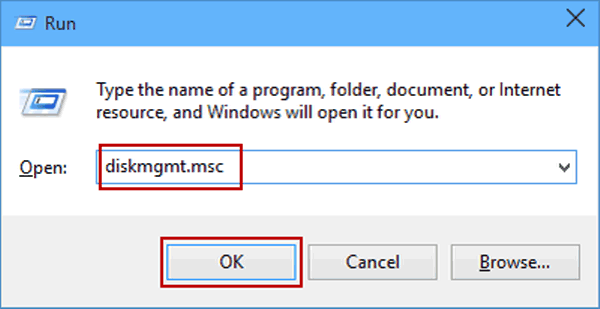
2. Change the Drive Letter: Sometimes a conflict with the assigned drive letter prevents Windows from recognizing the card. Open Windows Disk Management (diskmgmt.msc), find your SD card, right-click the volume, and select “Change Drive Letter and Paths” to assign a new, unique letter (e.g., moving from F: to Z:).
3. Reinstall SD Card Drivers: Outdated or faulty drivers can cause recognition errors. Access the Device Manager, expand “Disk drives,” right-click the SD card entry, select Uninstall device, and then restart your computer. Windows will automatically reinstall the correct drivers.
4. Use the CHKDSK Command (Check Disk): This powerful command-line utility scans the card’s file system for errors and bad sectors, then attempts to repair them.
- Open Command Prompt as an administrator.
- Type:
chkdsk X: /f /r /x(Replace X with your SD card’s drive letter).
chkdsk X: /f /r /x
/ftells CHKDSK to fix errors on the disk./rtells it to locate bad sectors and recover readable information./xforces a dismount of the volume first, if necessary.
5. Run Diskpart Clean (Advanced): For logical errors, the diskpart utility can clean the card, preparing it for re-initialization without immediate formatting.
- Open Command Prompt as an administrator.
- Type:
diskpart - Type:
list disk(Identify your SD card by size; be extremely cautious to select the correct one). - Type:
select disk [number] - Type:
clean(This command removes all partition and volume information, making it unallocated space).
6. Format the SD Card (Last Resort): If all logical fixes fail, a complete format is the final step to restore the card’s file system integrity, but this erases all data. Only proceed after all data recovery attempts have been exhausted.
2. Unable to Access SD Card on Computer (RAW Format)
Inaccessibility often results from file system corruption, leading the operating system to display the card in the RAW format (meaning Windows doesn’t recognize a usable file system like FAT32 or exFAT). Other symptoms include:
- The card displaying 0 bytes of storage.
- An error stating, “This volume does not contain a recognized file system.”
- Receiving an “Location is not available and access is denied” message.
If data recovery attempts have been made to recover deleted files on SD card, formatting the SD card is the required solution to rebuild the file system and restore its accessibility. Detailed Formatting Options are as follows:
Option 1: Format in the Host Device: If the SD card will primarily be used in a specific device (like a camera), always format it directly in that device for optimal compatibility.
Option 2: Format on the Computer:
- Via File Explorer (Quickest): Press Win + E. Right-click the SD card, select Format, and choose the appropriate file system (usually FAT32 for cards up to 32GB, or exFAT for larger cards).
- Via Disk Management (Best for Complex Cards): Type “Disk Management” in the search box. Right-click the SD card partition and choose Format to access more advanced options.
- Via Command Prompt (Most Powerful): This method forces a format and is often successful when graphical methods fail.
3. SD Card Is Write-Protected
A write-protected card is locked into read-only mode, preventing you from modifying, deleting, or adding any new files. This is often a safety feature. Three Comprehensive Methods to Remove Write Protection:
Method 1: Use the Physical Lock Switch:
Check the small, plastic tab on the side of the SD card. If the tab is slid towards the “Lock” position (usually indicated by an arrow or a small padlock icon), the card is write-protected. Slide the tab to the “unlocked” position. If the card remains locked, the switch mechanism may be damaged, or the card is failing.
Method 2: Edit the Windows Registry (For Software Locks):
This method targets software-based write protection applied by the operating system.
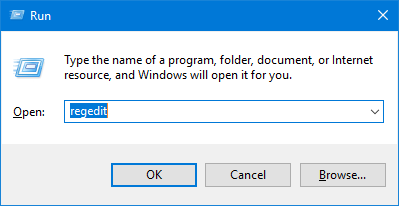
- Press Win + R, type
regedit, and navigate to:HKEY_LOCAL_MACHINE\SYSTEM\CurrentControlSet\Control
- If the
StorageDevicePoliciesfolder exists under Control, select it. If not, right-click Control and create a new key namedStorageDevicePolicies. - In the right panel of
StorageDevicePolicies, find or create theWriteProtectDWORD (32-bit) Value. - Double-click
WriteProtectand ensure its Value data is set to 0 (zero). A value of 1 enables write protection. - Restart your computer.
Method 3: Use Command Prompt (Diskpart Utility):
This is the most forceful software solution for removing the read-only attribute.
- Open Command Prompt as an administrator.
- Enter the following commands sequentially:
diskpartlist diskselect disk *(replace * with the SD card number)attributes disk clear readonly(This command removes the current read-only attribute)
4. SD Card Is Dead (Physical or Terminal Failure)
Recognizing a completely failed or “dead” SD card is important, as it signals that software recovery is impossible. Signs of terminal failure include:
- Physical Unresponsiveness: The card is not recognized by any device (multiple computers, cameras, etc.).
- Severe Data Anomaly: The card exhibits abnormal and catastrophic behavior, such as unexplained, massive file loss or permanently altered card capacity, often linked to bad memory chips.
If the card is physically damaged (cracked, broken connector) or exhibits these severe unrecoverable errors, standard software is useless. Data recovery is likely impossible without expensive, specialized laboratory services.
Tips to Protect Your SD Card and Maximize Its Lifespan:
- Use Quality Hardware: Always use a real, high-quality data cable and a certified card reader to prevent power fluctuations.
- Practice Safe Ejection: Always safely eject the SD card from your computer or device before physically removing it to ensure all write operations are complete.
- Handle With Care: Avoid exposing SD cards to extreme heat, cold, moisture, or unnecessary physical stress (bending, dropping).
- Monitor Usage: Regularly check the card’s capacity and integrity. Never let the card fill up completely, as this strains the memory chip.
Summary
SD card data loss can be frustrating, but it is often reversible.
- If you delete files or format the card, your primary focus should be immediate free recovery using specialized software like WinfrGUI.
- If the card is corrupt, RAW, or inaccessible, attempt the detailed troubleshooting steps (CHKDSK, Registry fix) to restore function.
By following the right procedures and using the correct tools, you can significantly increase your success rate in learning how to recover deleted files on SD card and restoring the card’s functionality. Protect your data today. Bookmark this guide, and keep a reliable recovery tool ready for the inevitable moments when technology fails.
🔗 More Tutorials:
 MyRecover
 FoneTool
