
Solved: Excel Errors Were Detected While Saving

Imagine this: You’ve spent hours crunching numbers, building formulas, and designing the perfect Excel spreadsheet. You hit Save, ready to call it a day — and then suddenly, an alarming message appears on your screen:“Excel errors were detected while saving. Microsoft Excel may be able to save the file by removing or repairing some properties.” Panic sets in. What went wrong? Is all your hard work lost? If this sounds familiar, you’re not alone. Many Excel users have encountered this issue, often at the worst possible moment. The good news is that the “Excel errors were detected while saving” problem is usually fixable — no need to reinstall Office or give up on your file. In this guide, we’ll explain what causes this error, and more importantly, walk you through step-by-step solutions to recover your work and prevent it from happening again.
Why Does Excel Show “Error Detected While Saving”?
This error usually happens because Excel is struggling with the file structure, location, or data. Here are some of the most common reasons:
| Possible Cause | What Happens |
|---|---|
| Unsupported file format or template | Excel can’t save properly because of incompatibility. |
| File size too large | Too many images, data, or objects overwhelm Excel’s limits. |
| Corrupted file properties | Metadata inside the file might be damaged. |
| Problematic save location | Network drives or faulty storage devices interrupt saving. |
| Macros or add-ins interference | Faulty VBA code or add-ins block save operations. |
| System errors or disk issues | A failing disk or file system error causes saving to fail. |
How to Fix Excel Error Detected While Saving
If you see the message “Excel errors were detected while saving”, don’t panic. This issue is common, and in most cases, you can recover your file without losing data. Let’s walk through practical solutions — from quick fixes to more advanced methods.
Method 1. Adjust the File Name, Save Location, and File Format
Many Excel saving errors happen because of issues with the file name, the folder where you’re saving, or the file format itself — so fixing these is often the quickest way to get back on track.
Step 1: In Excel, click File > Save As, then enter a new, simple file name without special characters like #, %, &, or / to avoid confusion.
Step 2: Choose a different save location — ideally a local folder like Documents rather than a network drive or external device, since permission or connection problems can block saving.
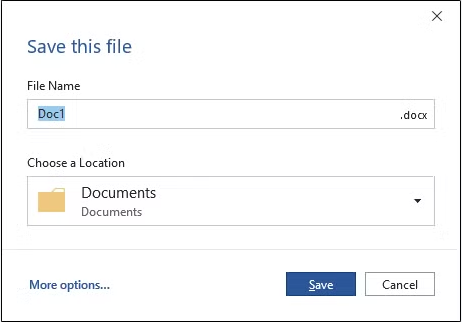
Step 3: From the Save as type dropdown menu, try saving your workbook in a different format, such as Excel Workbook (*.xlsx), Excel 97-2003 Workbook (*.xls), or Excel Binary Workbook (*.xlsb), which can help bypass format-related corruption.
Step 4: Click Save and see if Excel successfully saves your file with these changes, often resolving errors caused by invalid names, save paths, or file formats.
If the file is still problematic or you’d like to recover an earlier version, check out this helpful guide on 6 Solutions to Restore a Previous Version of Excel File.
Method 2. Repair the File by Copying Data or Using Excel’s Open and Repair
If your Excel file seems corrupted or won’t save, you can try rescuing your data by either copying it into a fresh workbook or using Excel’s built-in repair tool to fix the file.
Step 1: Open a new, blank Excel workbook by clicking File > New > Blank Workbook.

Step 2: Switch back to your problematic file, select the data you want to keep—start by copying just the core cells or sheets—and press Ctrl + C or right-click and choose Copy.
Step 3: Paste the copied data into the new workbook using Ctrl + V or right-click and select Paste, preferably starting with values only to avoid transferring corrupted formatting or elements.
Step 4: Save the new workbook with a different name and location, then try saving changes there to see if the error is gone.
Step 5: If copying data doesn’t work or the file won’t open, use Excel’s Open and Repair feature by going to File > Open > Browse, selecting your corrupted file, clicking the arrow next to the Open button, and choosing Open and Repair.
Step 6: Choose Repair first to let Excel attempt to fix the file automatically, and if that fails, select Extract Data to recover whatever content is salvageable.
Step 7: After repairing, save the recovered file with a new name and location to avoid overwriting the original damaged file.
If your Excel file is severely corrupted or lost and built-in tools don’t help, you might also try a free recovery tool like WinfrGUI, which can scan your drives and help recover lost or deleted Excel files easily and safely.
Method 3. Troubleshoot Add-ins, Macros, and Advanced Settings
Excel saving errors can sometimes stem from problematic add-ins or macros interfering with your workbook, or from advanced settings that need tweaking—especially for large or image-heavy files.
Step 1: Close Excel completely, then open it in Safe Mode by pressing Windows + R, typing excel.exe /safe, and hitting Enter; this starts Excel without any add-ins or macros running.
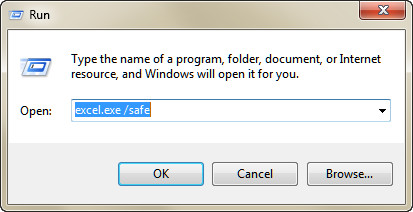
Step 2: Open your problematic file in Safe Mode and try saving it; if the error disappears, it’s likely caused by one or more add-ins or macros.
Step 3: To disable add-ins, go to File > Options > Add-ins, then at the bottom choose COM Add-ins from the dropdown and click Go; uncheck all add-ins and click OK.
Step 4: Restart Excel normally and test saving your file again; if it works, re-enable add-ins one by one to identify the culprit.
Step 5: Press Windows + R, type regedit, and press Enter to open the Registry Editor; then locate the key for your Office version at: HKEY_CURRENT_USER\Software\Microsoft\Office\<your Office version>\Excel\Options.
Step 6: Right-click in the Options folder, select New > DWORD (32-bit) Value, name it FullLoadImagesOnFileLoad, then double-click it and set its value to 1.
Step 7: Close the Registry Editor, restart Excel, and try opening and saving the file again; this forces Excel to fully load images on file open, which can prevent saving errors related to image-heavy workbooks.
If you’re trying to locate autosaved or backup versions of your Excel file during this process, check out Where To Find Autosave Excel Files: Top Methods for quick recovery options.
Method 4. Check Your Disk for Errors
Sometimes, saving errors in Excel happen because of issues with your hard drive or storage device, so running a disk check can fix underlying problems affecting file saving.
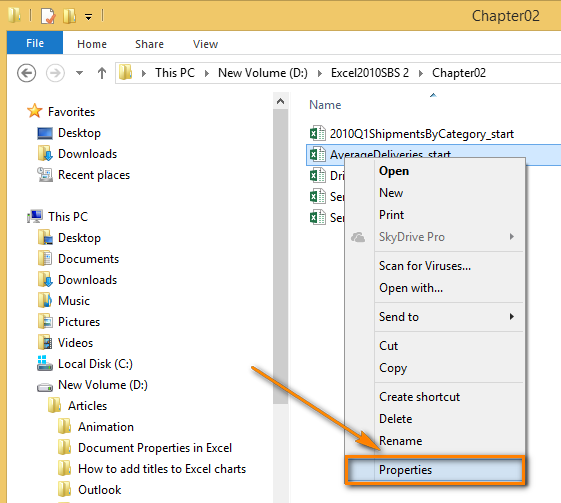
Step 1: Open File Explorer, then right-click the drive where your Excel file is stored (for example, the C: drive) and select Properties from the menu.
Step 2: In the Properties window, click on the Tools tab, then under the Error checking section, click the Check button.
Step 3: If Windows detects any errors on the drive, it will prompt you to repair them—follow the on-screen instructions to let Windows fix the file system issues.
Step 4: Once the disk check and repair are complete, restart your computer, then try saving your Excel file again to see if the error has been resolved.
Method 5. Repair or Reinstall Microsoft Office
If none of the previous fixes work, repairing or reinstalling Office can often solve stubborn Excel saving errors by fixing damaged program files.
Step 1: Open Settings on your Windows PC by pressing Windows + I, then go to Apps > Apps & features.
Step 2: Scroll down to find Microsoft Office or Microsoft 365, click the three-dot menu next to it, and select Modify.
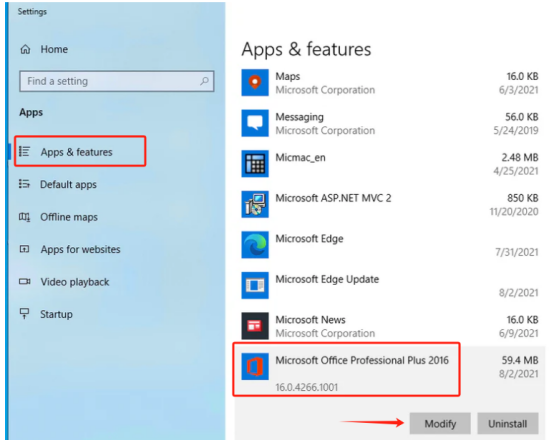
Step 3: Choose Quick Repair first — this runs a fast scan and fixes common problems without needing internet access; follow the on-screen instructions to complete it.
Step 4: If Quick Repair doesn’t fix the issue, repeat the steps and choose Online Repair, which takes longer but performs a full reinstall of Office files; after it finishes, restart your computer.
After repairing or reinstalling Office, open Excel and try saving your file again — this usually clears up any software-related saving errors. If the problem persists, it may be worth contacting Microsoft Support or exploring advanced recovery tools.
Troubleshooting FAQ: Excel Errors Were Detected While Saving
Q1: Why do I get the “Excel errors were detected while saving” message?
This error can occur due to corrupted file content, invalid file names, saving to restricted locations, large file sizes, interfering add-ins or macros, or disk errors affecting your file.
Q2: How can I fix Excel save errors without reinstalling Office?
Start by saving the file with a new name and location, try saving in a different Excel file format, copy your data to a new workbook, or use Excel’s built-in Open and Repair tool before considering Office repair.
Q3: What should I do if my Excel file won’t open or keeps crashing?
Try opening Excel in Safe Mode (excel.exe /safe), disable any add-ins, copy data into a new workbook, or use the Open and Repair feature to recover your file.
Q4: Can problematic add-ins or macros cause saving errors?
Yes, they can interfere with Excel’s saving process. Disable all add-ins by going to File > Options > Add-ins, then manage COM Add-ins and restart Excel to test.
Q5: How do I check if my hard drive is causing the problem?
Run a disk check by right-clicking the drive in File Explorer > Properties > Tools > Check to detect and fix file system errors that might block Excel from saving files.
Conclusion
There’s nothing more frustrating than pouring hours into an Excel workbook only to be blocked by a message like “Excel errors were detected while saving.” But as we’ve explored, this error doesn’t have to spell disaster for your data. Whether it’s caused by a file name issue, corrupted properties, incompatible formats, or even a storage glitch, there are reliable fixes you can try right away. From saving under a new name or format, to using Excel’s Open and Repair tool, to disabling add-ins or checking your disk, these steps can help you protect and recover your work. The key takeaway? Stay calm, follow the methods outlined in this guide, and you’ll likely resolve the error without losing valuable information. And of course, make it a habit to back up your files and enable AutoSave whenever possible. We hope this guide empowers you to tackle the Excel errors were detected while saving challenge with confidence.
🔗 Also Read: Excel Temp File Location: Recover Unsaved Spreadsheets from Excel Temporary Files
 MyRecover
 FoneTool
