
How to Recover Deleted Files from a USB Flash Drive

Flash drives (USB drives) are incredibly convenient for portable storage, but a simple error can lead to heartbreaking data loss. Whether you accidentally deleted an important file, formatted the drive, or encountered a corruption error, the good news is that recovery is often possible. The techniques discussed here are not just for flash drives; they are principles used by professionals who need to recover deleted files usb drive as well.This guide explores the best solutions to retrieve your lost files, including a look at WinfrGUI, a powerful, free, and user-friendly Windows recovery software.
Is It Possible to Recover Deleted Files from a Flash Drive?
Yes, it is possible!
When a file is “deleted” from a flash drive, the space it occupies is simply marked as available for new data. The actual file data remains until it’s overwritten by a new file. This is why time is critical. The moment you realize data is missing, stop using the USB drive immediately. Do not save any new files to it, as this drastically increases the chance of overwriting your lost data, making recovery impossible. The situation is similar to a desktop PC failure where you might be looking to recover deleted files usb drive—the drive usage must stop.
Common Causes of USB Data Loss
Understanding what causes the loss can help prevent it in the future:
- Accidental Deletion or Formatting: The most common cause—mistakenly pressing the “Delete” button or running a full format.
- Improper Ejection: Removing the USB drive without safely ejecting it (using “Safely Remove Hardware”).
- System Failure or Power Surge: Unexpected shutdowns while the drive is connected.
- Physical Damage: The drive being dropped, bent, or exposed to water.
- File System Corruption: Errors that make the drive inaccessible or ask to be formatted.
- Malware or Virus Attack: A malicious program deleting or encrypting files.
5 Methods to Recover Lost Files from a USB Drive
The standard Recycle Bin recovery process will not work for files deleted directly from a removable flash drive. Instead, try one of these specialized methods.
Method 1: The Easiest Way – Use WinfrGUI
For the most reliable and user-friendly recovery, a dedicated software tool is often the best choice. WinfrGUI is a popular, powerful, and completely free data recovery tool designed specifically for Windows users. It provides a simple graphical interface for the underlying Windows File Recovery tool.
Steps to Recover Files with WinfrGUI:
Step 1: Connect your USB flash drive to your Windows PC.
Step 2: Download and launch WinfrGUI and select your USB drive as the source partition.
Step 3: Choose the destination folder where you want to save the recovered files (make sure it’s a different drive than the USB drive).
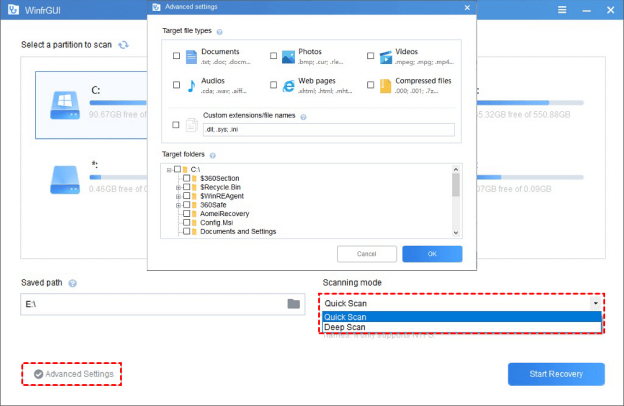
Step 4: Select a scan mode (for example, choose Deep Scan for heavily damaged or long-lost files).
Step 5: Click Start Recovery and wait for the scan to complete.
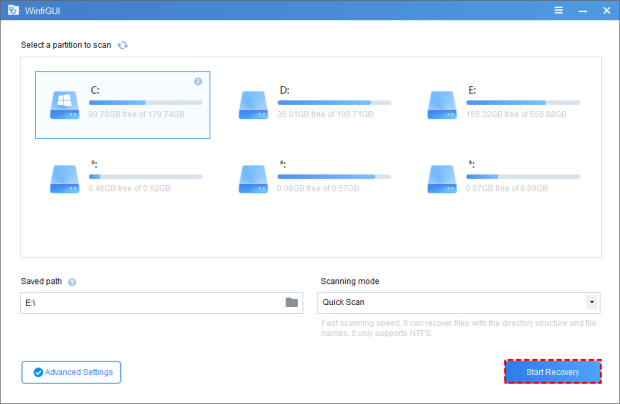
✅ Advantage: High success rate, easy-to-use graphical interface, and completely free. This makes it a great choice before consulting a professional to recover deleted files usb drive scenarios.
Method 2: Restore from a Previous Version (Windows Feature)
This Windows feature allows you to restore files and folders from backup copies saved as “shadow copies.” This only works if System Protection was enabled on the folder before the files were deleted.
Steps to Use Previous Versions:
Step 1: Navigate to the folder where the files were originally stored before being moved to the USB drive, or to the parent folder on the USB drive itself (if the folder still exists).
Step 2: Right-click on the folder and select “Properties.”
Step 3: Go to the “Previous Versions” tab.
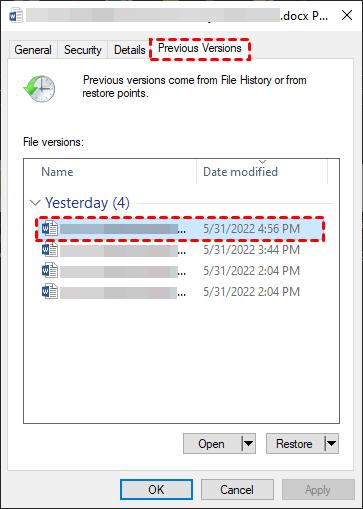
Step 4: Select a version dated before the data loss occurred.
Step 5: Click “Restore” to recover the entire folder’s contents.
✅ Advantage: No third-party software needed. ❌ Disadvantage: Only works if System Protection was set up on the location.
Method 3: Using Windows File Recovery (Advanced Command Line)
Windows File Recovery (WFR) is a Microsoft command-line utility for Windows 10 (version 2004 and later) and Windows 11. It’s powerful but requires using the Command Prompt (CMD).
Steps to Use Windows File Recovery:
Step 1: Download Windows File Recovery from the Microsoft Store.
Step 2: Open the Command Prompt as an Administrator.
Step 3: Enter the recovery command in the following format:
winfr [Source Drive]: [Destination Drive]: /[Mode] /[Switches]
Step 4: For example, to perform a comprehensive scan:
winfr E: C: /extensive /n *.docx
(This command tries to recover all .docx files from the E: drive and save them to the C: drive.)
Step 5: Press Enter to start the recovery process.
✅ Advantage: Official Microsoft tool, no third-party software. ❌ Disadvantage: Requires precise command-line input.
Method 4: CMD chkdsk and attrib Commands (For Hidden Files)
Sometimes, files aren’t deleted but are simply hidden or marked as system files due to a virus or file system error. The Command Prompt can be used to check the disk and reveal these files.
Steps to Use CMD:
Step 1: Connect the USB drive to your computer.
Step 2: Open the Run window by pressing Windows Key + R, type cmd, and press Enter.
Step 3: Type the following command (replace H with your USB drive’s letter) and press Enter:
chkdsk H: /f
Step 4: Next, reveal any hidden files by typing the following command and pressing Enter:
attrib -h -r -s H:\*.* /s /d
Step 5: Check your USB drive — the recovered or previously hidden files may now appear in a newly created folder.
✅ Advantage: Can recover files that were only hidden.
Method 5: Recover from a Windows Backup
Before attempting any complex recovery, always check your backups first! If you use Windows Backup, File History, or a cloud service to sync files, the lost data might be saved there.
Steps to Use Windows Backup (if configured):
Step 1: Open the Control Panel on your Windows PC.
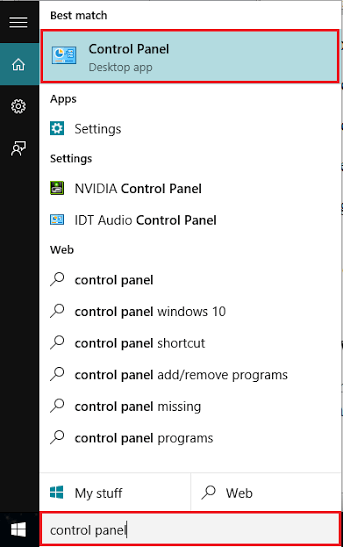
Step 2: Select “Backup and Restore” (or “Backup and Restore (Windows 7)” on newer systems).
Step 3: Follow the on-screen wizard to restore files from your previously created backups.
✅ Advantage: Easiest and safest method if a recent backup exists.
Conclusion: Prevention is the Best Cure
In conclusion, once you encounter data loss, immediately cease using the affected drive. Software like WinfrGUI provides a reliable solution for recovering lost data. While these methods are powerful, remember that the most secure defense against data loss—including the ultimate catastrophe of needing to recover deleted files usb drive—is the consistent creation of external backups.
🔗 More Tutorials:
 MyRecover
 FoneTool
