
How Can You Recover Deleted Blink Videos?

I installed Blink cameras to keep an eye on my home, but one night, after hearing a suspicious sound, I went to check the footage—only to find the clip missing. I didn’t remember deleting it, so I started to panic. That’s when I learned something frustrating: Blink only stores videos in the cloud for a limited time, and if you don’t back them up, they’re automatically erased. I kept asking myself, can you recover deleted Blink videos somehow?
Especially if they were saved to a USB drive and accidentally removed? After lots of digging, I found out there’s still a way—if you used Sync Module 2 and local storage. With the help of a free recovery tool called WinfrGUI, I was actually able to get my deleted video back. In this guide, I’ll walk you through how Blink stores videos, how backups work, and exactly how to recover lost footage.
How Blink Videos Are Stored (and Why They Might Disappear)
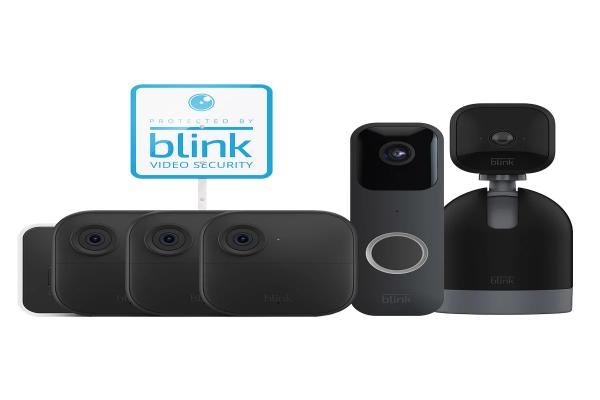
Understanding how Blink handles video storage is key to avoiding accidental loss—especially if you’re relying on footage for home security or evidence.
Cloud Storage (Default Method)
By default, Blink videos are saved to Blink’s cloud servers, but this storage is temporary:
- Up to 60 days in the United States
- Up to 30 days in the UK, Europe, and other regions
Once that retention period ends, the clips are automatically deleted—even if they contain important motion events. If you haven’t manually saved or backed up those videos, they’re gone for good.
USB Backup with Sync Module 2 (Recommended)
If you’re using Blink’s Sync Module 2, you can take control of your video storage by backing up clips to a USB flash drive. This adds a layer of protection and lets you keep videos as long as you want.
There are two backup options, depending on whether you have a Blink subscription:
Option1. Clip Backup (Requires Subscription)
This feature automatically saves cloud-based motion clips to your USB drive once every 24 hours. You can access these backups by connecting the drive to your PC or compatible device.
Option2. Local Storage (No Subscription Needed)
Without a subscription, your Blink system can still record motion events directly to the USB drive. These locally stored clips are viewable via the Blink app and don’t rely on the cloud at all.
How Can You Recover Deleted Blink Videos
So here’s the big question: Can you recover deleted Blink videos?
The answer depends on where the videos were stored and how they were deleted. If your Blink videos were only saved to the cloud and have already been automatically deleted due to the expiration period (e.g., 30 or 60 days), then unfortunately, they’re gone for good. Blink does not offer any way to retrieve expired or cloud-deleted clips.
But here’s the good news: If you backed up your Blink clips to a USB drive using Sync Module 2, and later accidentally deleted them from the USB—there’s still hope. Those files may not be gone permanently yet, and with the right recovery tool, you can bring them back. That’s where WinfrGUI comes in.
What Is WinfrGUI?
WinfrGUI is a free, easy-to-use file recovery program for Windows 10 and 11. It’s designed to recover:
- Deleted videos from USB drives
- Photos, documents, and other file types
- Data from SD cards, external drives, and more
Even if you accidentally formatted your USB drive, WinfrGUI can scan and recover deleted files—with no technical skills needed.
How to Recover Deleted Blink Videos with WinfrGUI
If your Blink clips were saved to a USB drive using Sync Module 2 and later got deleted—don’t worry. As long as the files haven’t been overwritten, you can still get them back using WinfrGUI, a free and reliable data recovery tool for Windows 10
Step 1: Connect the USB Drive and Launch WinfrGUI
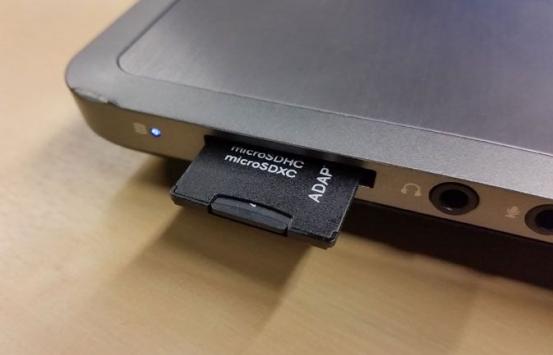
- Start by inserting the USB flash drive (the one used for Blink video backups) into your Windows PC.
- Then, download and install WinfrGUI if you haven’t already.
- Launch the program—no technical skills needed; the interface is simple and beginner-friendly.
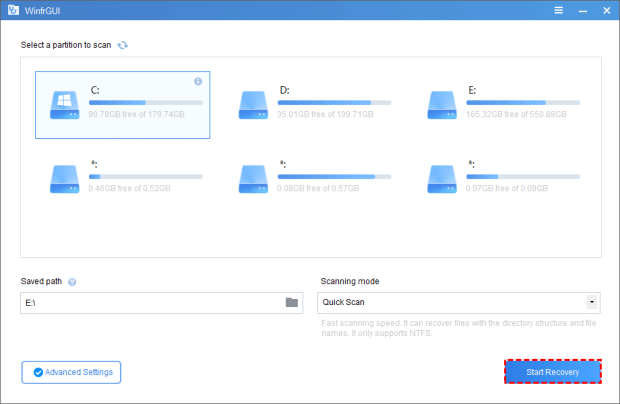
Step 2: Select the USB Drive to Scan
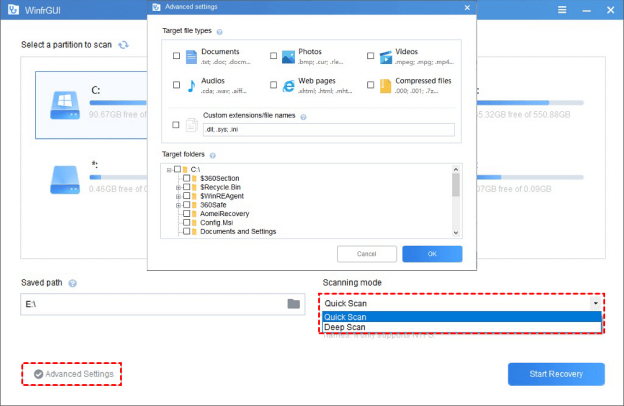
- Once WinfrGUI is open, you’ll see a list of available drives.
- Click the “Scan” button to begin the search for deleted files.
- Click on your USB drive (typically labeled as “Removable Disk”).
- Choose a destination folder on a different drive where the recovered files will be saved.
Step 3: Filter and Preview the Scan Results
- Once the scan is done, you’ll see a list of recoverable files.
- Use the built-in filters to narrow the results by file type, size, or date—this makes it easier to find your Blink video clips.
- You can also preview the videos before recovery to ensure you’re selecting the right ones.
Step 4: Recover and Save Your Blink Videos
Once you’ve found the videos you want:
- Select the files by checking the boxes next to them.
- Click the “Recover” button.
- Choose a safe location on your PC (not the original USB) to save the restored videos.
If you’re not sure which file is your Blink video, previewing it helps avoid recovering unnecessary data.
Why Your Blink USB Backup May Have Failed
If you’ve noticed that some recent motion clips didn’t get saved to your USB drive, you’re not alone. Several common issues can cause Blink backups to fail. Here are the main reasons to check:
1. Insufficient Free Space on USB Drive
Blink requires at least 375MB of free storage on your USB drive to save new video clips. If your drive is almost full or completely out of space, Blink won’t be able to back up any additional footage until you free up some room.
2. Unstable or Interrupted Wi-Fi Connection
The process of backing up clips from the cloud to your USB drive depends on a stable internet connection. If your Wi-Fi signal is weak, disconnects, or experiences interruptions during transfer, the backup might not complete properly or could result in corrupted files.
3. USB Drive Not Recognized by Sync Module 2
For the USB backup to work, the Sync Module 2 must properly detect your USB drive. If it can’t recognize the device, no clips will be saved. To check the status:
- Open the Blink app
- Look for the USB status icon
- Green means the drive is connected and working correctly
- Red or Gray means the drive is not detected or has connection issues
If your clips aren’t saving as expected, start by checking these three areas to troubleshoot the problem.
Conclusion
In summary, recovering deleted Blink videos is possible—but only if you’ve backed them up to a USB drive using Sync Module 2. Cloud-stored videos that have expired or been deleted from the server unfortunately cannot be recovered. If you do have your clips saved locally on a USB drive and accidentally delete them, using reliable recovery software like WinfrGUI makes the process straightforward and accessible for anyone. Just connect your USB drive, scan for deleted files, preview your videos, and recover what you need. Before any data loss occurs, it’s essential to regularly check your USB drive’s status, ensure there’s enough free space, and verify that your Sync Module is properly recognizing the device. Taking these preventive steps will help you avoid permanent loss of important Blink footage. With the right tools and care, recovering deleted Blink videos doesn’t have to be a headache—so don’t wait until it’s too late!
🔗 Also Read:
How to Get Back Deleted Videos on PC, Phone, or SD Card
How to Recover Permanently Deleted Videos with Free Software
 MyRecover
 FoneTool
