
Text Recovery Converter Word: Simple Fix for Corrupt Files

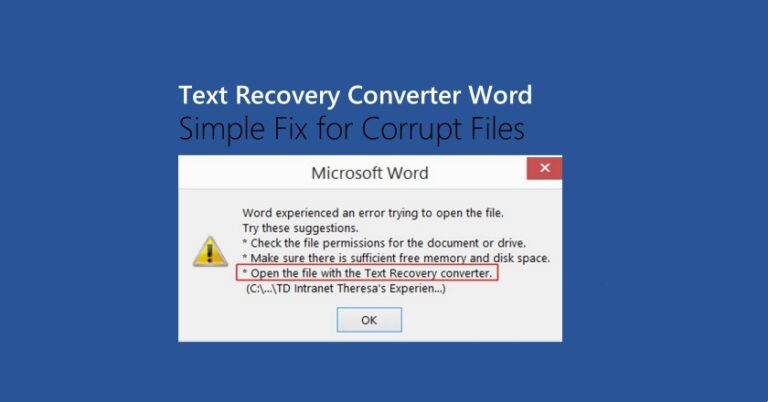
Imagine this—you open a Word document you’ve been working on for hours, only to find it won’t open or shows a bunch of strange, unreadable gibberish. Total panic, right? Before you throw in the towel, there’s a handy, built-in feature in Microsoft Word called the Text Recovery Converter Word that might just save the day. This tool digs deep into corrupted files and pulls out the actual text, even when the document seems completely broken. While it won’t restore images, formatting, or tables, it’s perfect for rescuing your most important content—the words themselves. In this article, I’ll walk you through how to use Text Recovery Converter Word on both Windows and Mac, step-by-step, so you can recover your essential text quickly and without stress. No more losing valuable work—let’s jump right in and get your file back on track!
What is Text Recovery Converter?
The Text Recovery Converter is crucial to Microsoft Word. It rescues text from damaged or unreadable files. information Recovery Converter swiftly scans damaged files to minimize data loss so users may recover critical information even when things go wrong.What Is the Text Recovery Converter in Word? The Text Recovery Converter is a built-in Microsoft Word utility designed to extract usable text from corrupt or unreadable Word documents. It works by bypassing unreadable elements—such as damaged formatting, images, or embedded objects—and pulling out raw text.
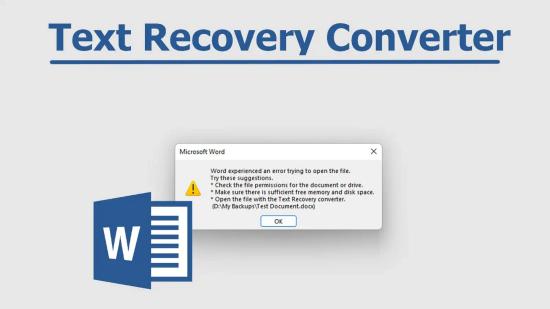
This tool is particularly useful when:
- Word crashes while saving a document
- You see an error when trying to open a file (e.g., “Word cannot open the document”)
- The document opens but displays unreadable content or blank pages
Keep in mind that this tool recovers only text, not formatting, images, or tables. Still, if your priority is rescuing valuable written content, it’s an essential first step before trying more advanced recovery tools.
How to Use Text Recovery Converter on Windows
If you’re using a Windows PC, here’s how to recover text from a corrupted Word file using the Text Recovery Converter:
Step 1: Click the Start menu, type “Word” into the search bar, and open the Microsoft Word app from the search results.
Step 2: Once Word opens, click the File tab in the top-left corner. This takes you to the backstage view where you can manage your documents.
Step 3: From the left-hand sidebar, choose Open to view your recent documents and open new ones.
Step 4: Under the Open section, click Browse to open File Explorer and manually locate the file you want to recover.
Step 5: At the bottom-right corner of the file window, click on the dropdown that says “All Word Documents” or “Files of Type.” From the list, choose Recover Text from Any File (.). This tells Word to treat the file as raw text.
Step 6: Now, go to the folder where your damaged file is stored. Click on the file to select it, and double-check that the “Recover Text from Any File” option is still chosen before moving on.
Step 7: Click Open to let Word attempt to recover any readable text. If successful, the content will be displayed in a new document.
Step 8: Go to File > Save As, and save your recovered content under a new name. This way, you preserve both the recovered version and the original file.
How to Use Text Recovery Converter on Mac
Using the Text Recovery Converter on macOS is a straightforward process, but it requires a few extra steps to reveal the right option. Follow the instructions below to extract text from a corrupted Word document using Microsoft Word for Mac:
Step 1: Once the document opens, examine the content to verify the recovered text. Some formatting artifacts or extra code may appear—this is normal. When you’re satisfied, save the file by going to File > Save As, and choose a new name to preserve the recovered version separately from the original.
Step 2: Open the Word application from your Dock, Applications folder, or by using Spotlight search (Cmd + Space and type “Word”).
Step 3: In the top menu bar, click File, then select Open. This will bring up the standard macOS file picker.
Step 4: In the Open dialog, browse to the folder where the corrupted Word file is stored. Click once to highlight the file, but don’t double-click it yet.
Step 5: Near the bottom of the dialog window, look for a dropdown menu labeled “Enable” or “Format.” This menu controls how Word opens the file.
Step 6: From the dropdown menu, choose Recover Text from Any File (.*). This instructs Word to bypass normal formatting and extract only the plain text from the document, regardless of its file extension.
Step 7: After selecting the correct file and file type option, click the Open button. Microsoft Word will attempt to extract and display any readable text from the corrupted document.
Tip: If your document is inside a corrupted ZIP file, and you’re struggling to extract it, check out our article on Corrupted ZIP File Repair Online: 4 Best Tools. It covers reliable online tools that can help fix and extract files from damaged ZIP archives, making your recovery process even smoother.
What If Text Recovery Converter Doesn’t Work?
Text Recovery Converter isn’t always successful, especially if:
- The corruption is severe or affects the file’s header
- The file was saved improperly or force-closed during editing
- The Word version differs significantly from the one used to create the file
If the above steps fail to recover your data, try the following alternatives:
1. Use Word’s Built-in “Open and Repair” Feature
- Launch Word and go to
File>Open. - Select the corrupted file.
- Click the arrow next to the
Openbutton. - Choose Open and Repair from the dropdown list.
This instructs Word to attempt a structural repair of the file before opening.
2. WinfrGUI for Additional Recovery Needs
If built-in methods fail, you can try a third-party tool like WinfrGUI. Although primarily designed to recover deleted files, WinfrGUI can occasionally restore documents from corrupted drives.
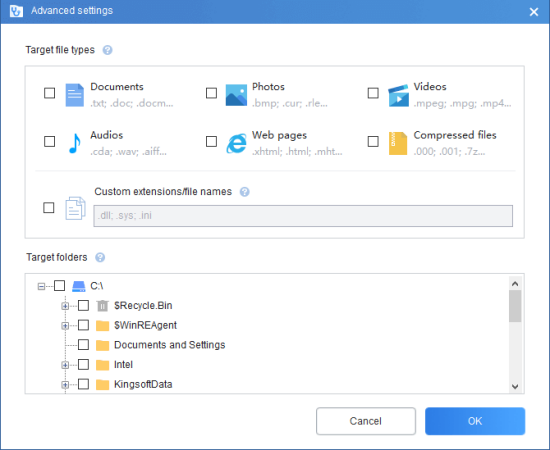
To use:
- Download and install WinfrGUI.
- Launch the tool and select the drive containing your file.
- Scan the drive and filter results by Word file types.
- Preview and recover your document if found.
This option is useful when corruption stems from drive or partition issues.
- Start up Windows GUI: Start WinfrGUI from your desktop after it’s been loaded.
- Pick out the damaged Word file: In WinfrGUI, pick out the damaged Word file that you want to fix.
- Start the process of fixing it: To begin the repair process, click on the “Repair” button.
- Get Back Recovered Text: Once the repair is done, you can view the text you retrieved in WinfrGUI.
WinfrGUI File Repair makes it easy and quick to get back the text. This keeps your important data saf
3. Recover from Temporary Files
Sometimes Word saves automatic backups:
- Open File Explorer and go to:
C:\Users\[YourName]\AppData\Local\Microsoft\Office\UnsavedFiles\ - Look for files with the extensions
.asdor.wbk. - In Word, click
File>Open>Recover Unsaved Documentsto access these.
4. Restore Previous Versions (Windows Only)
- Right-click on the corrupted Word document.
- Choose
Restore previous versions. - Select a previous version from the list and click
Restore.
This works only if File History or OneDrive versioning is enabled.
Tips to Prevent Word Document Corruption
- Save Frequently: Use
Ctrl + Soften while editing. - Avoid Editing from USB Drives: Copy the file to your desktop first.
- Enable AutoRecover: Go to
File>Options>Saveand ensure AutoRecover is turned on. - Use Cloud Backups: OneDrive or Google Drive with version history can protect your work.
- Close Programs Safely: Always close Word before shutting down your computer.
FAQs about Text Recovery Converter Word
Q1: Why use Word’s Text Recovery Converter?
A: In order to ensure that you lose as little data as possible, Text Recovery Converter is able to extract useable text from Word files that have been corrupted or password protected.
Q2: What section of Microsoft Word has Text Recovery Converter?
A: Because it is accessible through certain menu items inside Microsoft Word, Text Recovery Converter makes it simple for users to initiate the process of text recovery.
Q3: Where can I find Text Recovery Converter in Mac Word?
A: It is possible for users to locate Text Recovery Converter in Word for Mac by using the identical techniques that they used to access it in Outlook for Windows. The flawless operation of document recovery on Mac systems is ensured by this particular action.
Q4: How do I choose Text Recovery Converter or WinfrGUI File Repair?
A: It is important to take into consideration your specific requirements and preferences while choosing between Text Recovery Converter and WinfrGUI File Repair. Make an educated decision that will assist you in regaining access to your data in a timely manner by comparing the features and benefits it offers.
Conclusion
Running into a corrupt Word document can feel like a nightmare—especially if you’ve put a lot of time and effort into it. Luckily, the Text Recovery Converter Word feature is there to help you pull out your valuable text, even when the file seems damaged beyond repair. It’s not perfect—it won’t save your formatting or images—but it’s a great first step to rescue your words. If the built-in recovery doesn’t do the trick, don’t worry. There are other tools out there, like WinfrGUI, that can sometimes recover files when Word can’t. Still, the best defense is a good offense: save often, back up your work, and use cloud storage with version history when you can. That way, even if your file gets corrupted, you’ll have a safety net. So, next time you hit a snag, give Text Recovery Converter a try—it might just save your day.
🔗 Also Read: Recovering Corrupted Video Files: 4 Effective Ways
 MyRecover
 FoneTool
