
How to Recover PDF File: Lost, Unsaved, or Corrupted

PDF files are the professional and academic standard for sharing documents, making their unexpected loss a major disruption. Whether you’re dealing with a crucial report that was accidentally deleted, a lengthy document that vanished during a software crash, or a corrupted file that simply won’t open, the experience is highly frustrating. The good news is that most lost PDF documents are retrievable. This comprehensive guide serves as your roadmap to successfully retrieving your vital information. We will demystify the conditions that allow recovery to happen and walk you through every proven technique, from simple Recycle Bin checks to advanced software solutions. Don’t panic—your lost file is likely still within reach. By following our logical, step-by-step methods, you will learn exactly how to recover PDF files regardless of the scenario, ensuring you can quickly get back to work.
PDF Recovery: Is it Really Possible?
Yes, recovering a deleted PDF file is highly possible, often even without a backup. The success of recovery depends on three main conditions:
- No Data Overwrite: When you delete a file (even permanently), it is not instantly erased from your storage device. Instead, the space it occupied is marked as available for new data. If that space has not yet been overwritten by new files, recovery software can locate and reconstruct the original PDF data.
- Non-TRIM SSDs (for deep recovery): If your lost files were on an SSD (Solid State Drive) with the TRIM command enabled, deep recovery is difficult. TRIM allows the operating system to permanently wipe the data blocks almost immediately after deletion to maintain SSD performance.
- Physical Integrity: The storage device (hard drive, USB, etc.) must be physically functional and detectable by your computer. If the device is physically damaged, professional data recovery services are the only, but costly, option.
Common Causes of PDF File Loss
Before attempting recovery, it helps to identify the cause, as this directs you to the correct solution:
- Accidental Deletion: The file was intentionally or unintentionally deleted (e.g., using the Shift+Delete shortcut).
- Unsaved Work: The PDF editing application (like Adobe Acrobat) or the computer crashed, leading to the loss of unsaved changes.
- Formatting or System Error: The drive or partition was formatted, or the file was lost due to a virus attack or file system corruption.
- Download/Transfer Issues: An interruption during downloading or transferring the PDF file resulted in a corrupt or incomplete document.
Section 1: How to Recover Accidentally Deleted PDF Files
Always start with these simple, built-in methods before moving to complex solutions. This section explains how to recover PDF file data that was recently deleted.
Method 1: Check the Recycle Bin / Trash Folder
This is the fastest and most common recovery method for recently deleted files.
Step 1: Double-click the Recycle Bin (Windows) or Trash (macOS) icon to open it.
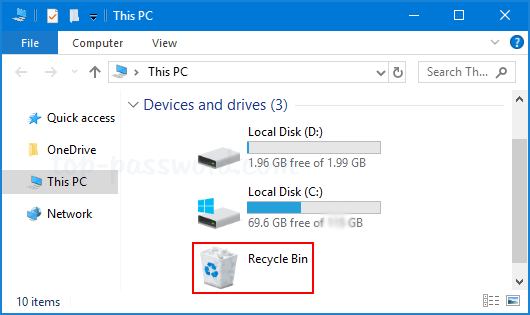
Step 2: Search or scroll to locate your missing PDF file by name or the .pdf extension.
Step 3: Right-click the file and select “Restore” or “Put Back.” This moves the PDF back to its original folder location.
Method 2: Use Windows File History
If the PDF was permanently deleted or is no longer in the Recycle Bin, File History can help if it was previously enabled to back up the folder where the file was stored. Learn how to recover PDF file versions using this built-in utility:
Step 1: Type “Restore your files with File History” in the Windows Search bar and open the utility.
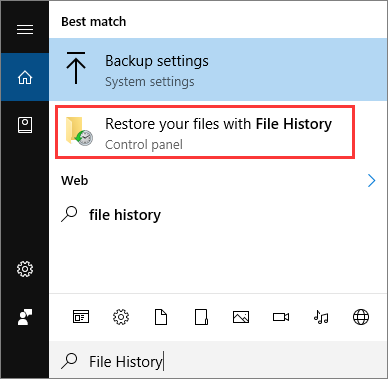
Step 2: Navigate to the folder that contained the lost PDF.
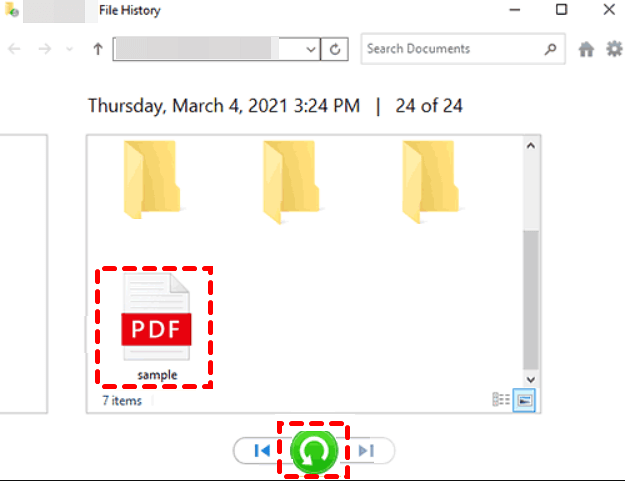
Step 3: Use the left and right arrows to browse the available backup versions until you find the desired PDF.
Step 4: Select the file and click the green “Restore” button to recover it.
Section 2: How to Recover Unsaved PDF Files
If a crash or power failure occurred while you were working, you need to look for temporary or auto-saved versions. Here’s how to recover PDF file documents that were never manually saved:
Method 1: Use the Auto-Recovery Feature in Adobe Acrobat
Adobe Acrobat Reader and other professional PDF editors include an Auto-Recovery feature designed to restore your work after an unexpected closure.
Step 1: Re-open Adobe Acrobat Reader. The application should automatically detect the crash and prompt you to restore the unsaved documents. Select “Yes” or “Open” to recover the auto-saved session.
Step 2: Immediately save the recovered file to prevent further loss.
Method 2: Manually Locate Temporary (.tmp) Files
PDF programs generate temporary backup files, especially when you are making unsaved edits.
Step 1: Close all PDF-related applications.
Step 2: Navigate to the likely temporary file path. For Adobe Acrobat DC on Windows, the path is often:C:\Users\YourUsername\AppData\Local\Temp(Note: Replace YourUsername with your actual Windows username.)
Step 3: Search the folder for large files or files modified around the time of the crash, often with a .tmp extension.
Step 4: Copy the potential file to a new, safe location.
Step 5: Rename the copied file, changing its extension from .tmp (or similar) to .pdf. Try opening the new .pdf file with your reader.
Section 3: The Ultimate Way to Recover All Lost PDFs
When the free methods fail, or the PDF loss is severe (e.g., hard drive formatting, partition loss, or deep corruption), a powerful, dedicated data recovery tool is your best bet for maximizing the chance of a successful recovery. This is the surest way to determine how to recover PDF file data from complex loss scenarios. A tool like WinfrGUI (a user-friendly interface for the powerful Microsoft Windows File Recovery tool) or other top-rated utilities (like Disk Drill, Recuva, or EaseUS Data Recovery) can perform a deep scan of the drive’s raw sectors.
Using Professional Data Recovery Software WinfrGUI
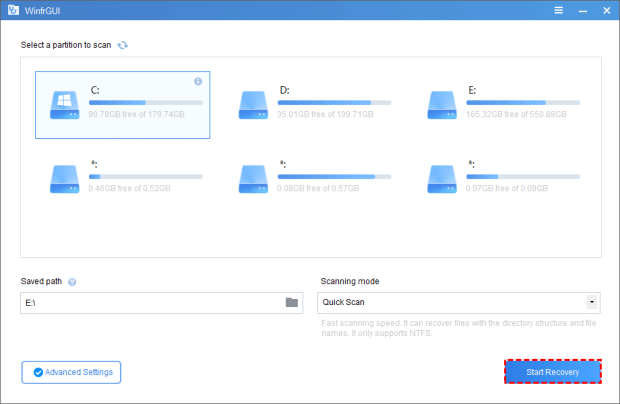
Step 1: Install and launch WinfrGUI and choose the exact drive or partition where the PDF was last stored.
Step 2: Initiate a Deep Scan to search for all recoverable file traces. You can often filter the search by the .pdf file type for faster results.
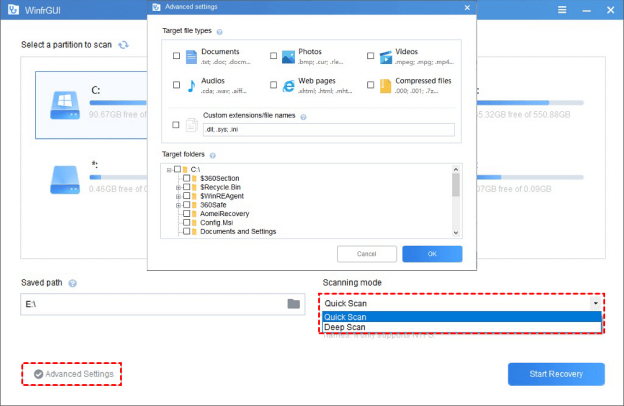
Step 3: Once the scan is complete, view the recoverable PDF files to check their integrity. Select the ones you want and click “Recover.” Crucially, save the recovered files to a different drive/location than the one you are recovering from.
PDF Recovery FAQ
Q1: How can I recover permanently deleted PDF files for free on Windows 11/10?
A: You can use Microsoft’s official Windows File Recovery command-line utility (downloadable from the Microsoft Store). This free tool requires you to use the command prompt with specific commands (e.g., winfr C: D: /extensive /n *.pdf) to recover files after deep deletion.
Q2: How can I recover deleted PDF files on Android?
A: If the file was synced, check the Trash folder in your Google Drive or other cloud storage apps. If it was stored locally, check the “Recently Deleted” folder in your device’s file manager. For older, permanently deleted files, a third-party Android data recovery application is usually required.
Q3: How can I secure a PDF file from accidental deletion?
A: Back up your PDF files to the cloud. You can also right-click the file in Windows, go to Properties $\rightarrow$ Security $\rightarrow$ Edit and adjust the permissions to prevent accidental modifications or deletions.
Conclusion and Prevention
PDF data loss is a common yet frustrating event, but it is rarely permanent. By following the logical progression of recovery methods outlined here—from the simple Recycle Bin check to leveraging unsaved temporary files and, finally, to advanced deep-scanning software—you stand an excellent chance of getting your important PDF documents back. The critical factor is to act quickly and stop using the affected device immediately to prevent data from being overwritten, which is the ultimate obstacle to successful file recovery. You should now have a solid understanding of how to recover PDF file data in almost any common situation, ensuring that accidental deletion or a system crash doesn’t lead to hours of lost work.
🔗 Also Read: 4 Effective Methods to Fix Corrupted or Damaged PDF Files
 MyRecover
 FoneTool
