
How to Recover Deleted PDF Files in Windows 10: 4 Easy Methods

Accidentally deleting PDF files is a common problem for Windows 10 users. Important documents, work files, or personal PDFs can be lost by mistake. System errors or disk issues can also cause data loss. The good news is that deleted PDF files can often be recovered. If you are looking for how to recover deleted PDF files in Windows 10, this guide will help. It shows four effective methods, including the beginner-friendly WinfrGUI tool. Follow these steps to restore your PDFs and prevent future data loss.
Key Takeaways
- To prevent future data loss, back up important PDFs regularly to cloud storage or external drives.
- Deleted PDF files in Windows 10 can often be recovered if they haven’t been overwritten.
- Start with simple methods: check the Recycle Bin and restore the file if it hasn’t been emptied.
- If File History is enabled, you can restore previous versions of PDFs from the original folder.
- For permanently deleted PDFs (e.g., Shift + Delete) or missing files, tools like WinfrGUI make recovery easy and beginner-friendly.
- Always check cloud storage and email attachments — many deleted PDFs may still exist there.
Method 1: Restore from the Recycle Bin
When you delete a PDF file using the Delete key or right-click → Delete, it usually goes to the Recycle Bin. This means the file is not permanently erased immediately. You can restore it from the Recycle Bin as long as it hasn’t been emptied.
Step 1: Go to your desktop and double-click the Recycle Bin icon to open it. If you don’t see the icon, press Windows + R, type shell:RecycleBinFolder, and hit Enter.
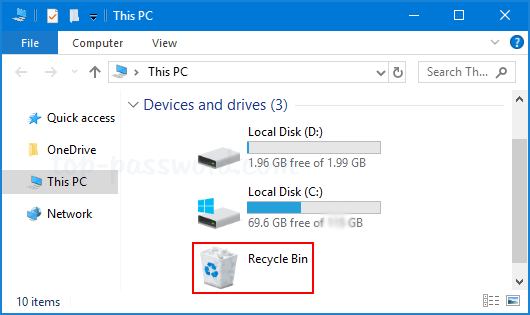
Step 2: In the Recycle Bin window, browse the list or use the search bar (top-right corner) to find your deleted PDF file.
Tip: If you remember the file name or part of it, searching can save time.
Step 3: Once you locate the PDF, right-click on it and select Restore from the context menu.
Step 4: The file will be restored to its original folder before deletion. You can reopen File Explorer and navigate to that location to access it.
This method only works if the PDF was deleted using Delete (not Shift + Delete) or if you haven’t emptied the Recycle Bin yet.
Method 2: Recover Using File History
If you’ve enabled File History on your Windows 10 system, recovering a deleted PDF file can be a breeze. This feature allows you to restore previous versions of files and folders, making it one of the easiest ways to recover a deleted PDF.
Step 1: Open File Explorer and navigate to the folder where the PDF file was originally stored.
Step 2: Right-click the folder and select “Restore previous versions” from the context menu.
Step 3: A list of available previous versions (backed up by File History or restore points) will appear.
Step 4: Select a version that likely contains the deleted PDF file. You can click “Open” to preview its contents and confirm.
Step 5: Once confirmed, click “Restore” to return the PDF file to its original location.
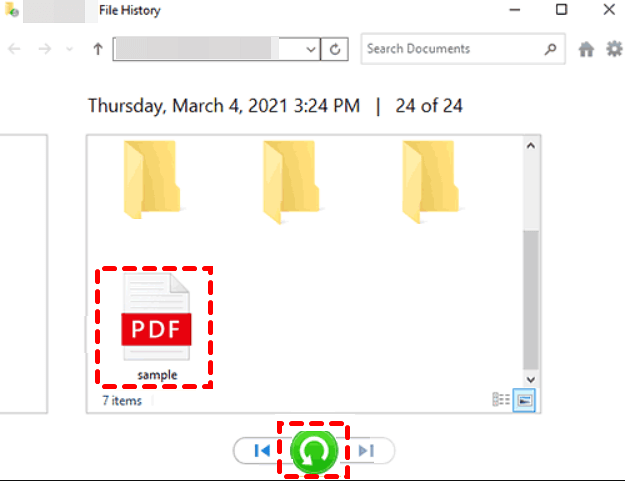
This method requires that File History was turned on before the PDF was deleted. If you haven’t set it up yet, it won’t be able to help with previous deletions, but other methods may still work.
Method 3: Use WinfrGUI – Free and Easy-to-Use Tool
If a PDF file was permanently deleted (for example, using Shift + Delete) or is no longer in the Recycle Bin, don’t worry. You can still recover it using a reliable tool like WinfrGUI.
Why Choose WinfrGUI?
✅ Free to use — no hidden fees or trial limitations.
✅ No command line needed — it offers a clean, graphical interface for Microsoft’s Windows File Recovery tool.
✅ Highly rated in 2025 for its speed, simplicity, and recovery success — especially with PDF, DOCX, and image files.
How to Recover a Deleted PDF with WinfrGUI
Step 1: Download WinfrGUI from the Microsoft Store and install it according to instructions.
Step 2: Select the source drive where the PDF was deleted (e.g., C: or D:).
Step 3: Choose between Quick Scan or Deep Scan depending on how long ago the file was deleted. Use the file type filter to narrow results to .pdf.
Step 4: Click Start Recovery and let the scan run.
Step 5: Once the scan completes, preview and select the PDFs you want to restore. Save them to a different location to avoid overwriting.
Deep Scan takes longer but finds more files that may have been overwritten or deleted a while ago.
Method 4: Check Cloud Storage and Email Attachments
In today’s cloud-connected world, there’s a good chance your deleted PDF still exists — either in your cloud backups or as an email attachment. What to Do:
Step 1: Log in to your cloud storage services, such as OneDrive, Google Drive, Dropbox, or iCloud.

Step 2: Check the Trash, Bin, or Recently Deleted folder. Most cloud platforms keep deleted files for 15–60 days by default.
Step 3: Use the search bar to look for the PDF file name, or search by keyword or file type (e.g., .pdf).
Step 4: If found, select the file and click Restore or Download to recover it to your device.
Step 5: Still missing? Search your email inbox and sent folder for the PDF as an attachment — especially if you’ve shared it before.
Many email services like Gmail and Outlook allow you to search using file types. Try searching: filename:pdf or has:attachment filename:pdf
Frequently Asked Questions (FAQs)
Q1: Can I recover a PDF file that was deleted over a month ago?
Yes. As long as the file hasn’t been overwritten, recovery is possible. Tools like WinfrGUI can increase the chances of restoring even older files.
Q2: Is WinfrGUI safe to use?
Absolutely. WinfrGUI is a legitimate recovery tool. It is a graphical interface for Windows File Recovery, so there is no risk of malware.
Q3: What if my PDF file is corrupted after recovery?
If the PDF is corrupted, you can use PDF repair tools available online. Some recovery tools also try to fix damaged files during recovery.
Q4: Do I need technical skills to use WinfrGUI?
Not at all. WinfrGUI is designed for beginners. Its simple interface makes file recovery quick and easy.
Q5: Can I recover PDF files from an external drive or USB?
Yes. WinfrGUI supports external drives, USBs, and other storage devices. You can scan and recover deleted PDFs from almost any connected drive.
Q6: How can I prevent losing PDF files in the future?
Regular backups are key. Save important PDFs to cloud storage or an external drive. You can also use tools like WinfrGUI to create backup copies and reduce the risk of permanent loss.
Conclusion
Now you know how to recover deleted PDF files in Windows 10. Whether your file was accidentally deleted, lost after a system crash, or permanently erased, there are several ways to get it back. Start with simple solutions like checking the Recycle Bin or using File History. If that doesn’t work, tools like WinfrGUI provide a reliable and easy method to recover your lost files.Don’t forget to back up your files regularly and consider using cloud storage to prevent future data loss. Stay proactive, and you won’t have to worry about losing your important PDFs again.
🔗 Also Read: How to Recover an Unreadable PDF File in Easy Steps?
 MyRecover
 FoneTool
