
3 Ways to Recover Deleted Excel Files Not in Recycle Bin

If you’ve deleted an Excel file and it’s not in the Recycle Bin, don’t panic — recovery is still possible. When a file is deleted, it doesn’t vanish from your system right away; instead, the space it occupied is marked for reuse and can remain recoverable until overwritten. That means with the right steps, you can often bring your lost Excel files back. In this post, we’ll show you three effective methods to recover deleted excel files not in Recycle Bin, especially for users on Windows 10. These methods include built-in Windows tools and reliable third-party recovery software, so you can choose the one that works best for your situation. You’ll also learn how to recover an unsaved Excel file, in case you closed it without saving. With these practical tips, you can restore your valuable data quickly and avoid future data loss.
How to Recover Deleted Excel File Not in Recycle Bin
If your Excel file is missing and it’s not in the Recycle Bin, don’t panic. Follow these important steps to improve your chances of recovery:
Stop Using Your Computer Immediately
As soon as you realize the file is gone, avoid using your PC. Actions like downloading files, installing programs, or even browsing the internet can overwrite the space where the deleted file once existed—making it much harder to recover.
Avoid Saving New Files to the Same Drive
Do not save anything to the folder or drive where the Excel file was originally located. New data can overwrite the deleted file, making it unrecoverable even with professional tools.
Use Proven Recovery Methods
Good news: you still have options. In the sections below, we’ll walk you through three proven methods to recover Excel files that aren’t in the Recycle Bin. Whether you use built-in Windows tools or dedicated recovery software, you’ll find a solution that fits your situation.
3 Ways to Recover Deleted Excel Files Not in Recycle Bin
Way 1: Recover Excel that was deleted without software from the previous version.
You can recover lost Excel files without a backup using Windows’ built-in features. This method only works if File History or System Protection was previously enabled. Follow these steps:
Step 1: Right-click the folder where your Excel file was stored and select “Properties”.
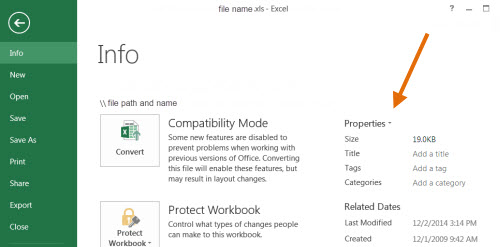
Step 2: Go to the “Previous Versions” tab.
Step 3: Browse the list of available folder versions. Select the version that likely contains your deleted Excel file.
Step 4: Click “Restore” to recover the entire folder, or click “Open” to preview the contents and manually copy the file you need.
Way 2: Recover Deleted Excel Files from File History
If you’ve misplaced your Excel file, you might be able to find it in one of these common folders: Downloads, Home, or Documents. Here’s how to check and recover it using File History:
Step 1: Open the Windows search bar and type “File History.” Select “Restore your files with File History” from the results.
Step 2: In the File History window, navigate through the folders (such as Documents, Downloads, or the original file location).
Step 3: Browse through the available versions and locate the Excel file you want to restore.
Step 4: Click the green “Restore” button 🔄 to recover the file to its original location.

Way 3: Restore permanently deleted Excel files with data recovery software.
If your Excel file is permanently deleted and not in the Recycle Bin, a data recovery tool like WinfrGUI can help. It’s a free, user-friendly program designed specifically for recovering deleted files from your hard drive, SSD, or USB. Follow these steps:
Step 1: Download WinfrGUI on your Windows PC and install it according to the instructions.
Step 2: Launch the program and select the drive where the Excel file was deleted (e.g., C:, D:, USB drive).
Step 3: Click “Scan” to begin searching for lost files.
Step 4: Once the scan completes, browse through the Document section or filter by .xlsx to locate your Excel file.
Step 5: Select the files you want to recover, click “Recover,” and choose a different drive to save them (avoid saving to the same location to prevent overwriting).
Recover Unsaved Excel Files in Windows 10/8/7
If you accidentally closed Excel without saving your work, you may still be able to recover it using Excel’s built-in AutoRecover feature. Follow these steps:
Step 1: Open Excel and click File > Info > Manage Workbook.
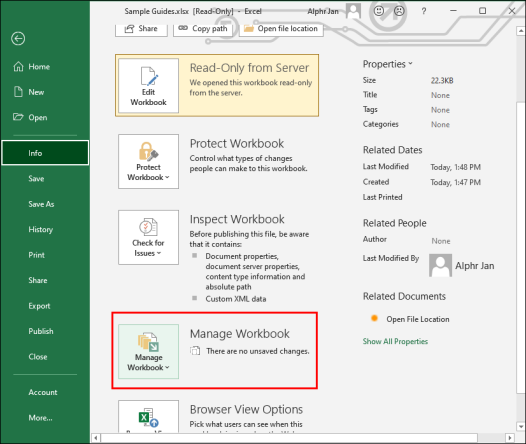
Step 2: Select “Recover Unsaved Workbooks” from the dropdown list.
Step 3: A list of unsaved files will appear. Click Open next to the file you want to restore.
Step 4: Once the file opens, click “Save As” in the yellow warning bar to permanently save your recovered workbook.
This method works best if AutoRecover is enabled in your Excel settings.
Recover Deleted Excel File not in Recycle Bin: FAQs
Q1.How can I recover Excel files that are not saved in Windows?
Utilizing the Excel Recent option is one way to retrieve Excel files that have not been saved. It is sufficient to either create a new worksheet in Excel or access an existing document. Go to the “Files” menu, and then select “Open.” The “Recover Unsaved Workbooks” option may be found underneath the “Last” section, and it is available by clicking on the clock icon.
Q2. Is it possible to recover permanently deleted Excel files?
Permanently deleted Excel files can be recovered if not rewritten. It is important to stop using your hard drive after loss of data to increase your chances of recovery. The fastest way to recover deleted Excel files is to use WinfrGUI, which allows you to scan, filter, sample, and restore all removed Excel files.
Q3. How can I recover deleted Excel files without using the software?
Check the recycling bin if you accidentally deleted a crucial Excel file. You can usually find the Excel file. Right-click the file and select “Restore” to move it back.
Q4. Which Excel recovery file is stored on Windows?
In the event that Excel fails and you lose essential files, you can still retrieve them by browsing to the folder that contains files that have not been saved. If you navigate to the C:\Users\AppData\Local\Microsoft\Office\UnsavedFiles directory, you will be able to access this folder.
If you make use of these suggestions and techniques, you will be able to successfully recover Excel files and projects that have been destroyed and have not been saved on Windows.
Final Thoughts
Recovering deleted Excel files not in the Recycle Bin may seem challenging, but with the right tools, it’s entirely possible. Whether you choose to use Windows’ built-in recovery options or third-party software, you can restore your lost files without hassle. The key is acting quickly and knowing the right steps to take. Keep these methods in mind next time you face accidental deletion — you’ll be prepared to recover your data and prevent future loss!
🔗 Also Read: How to Recover Files from the Recycle Bin After Empty (Windows 10)
 MyRecover
 FoneTool
