
How to Recover Accidentally Closed Excel Without Saving

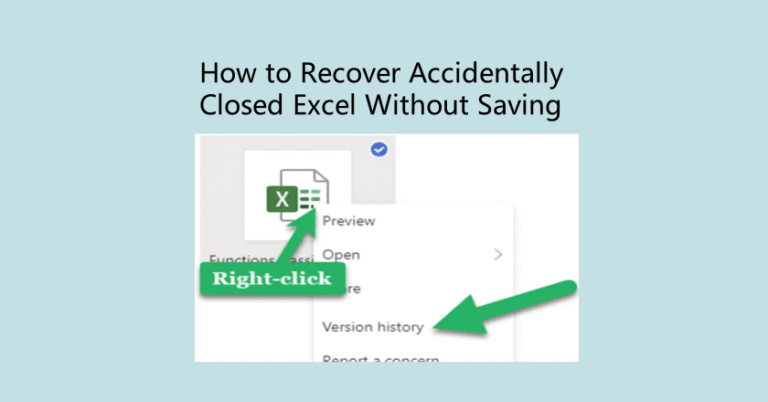
It happened on a hectic Friday afternoon—I was finalizing a crucial report in Excel when I accidentally closed Excel without saving. My heart sank. Hours of work seemed lost in an instant. Panic set in, but I refused to give up. I knew there had to be a way to recover my lost data. After some trial and error, I discovered methods that worked perfectly, and within just a few minutes, I was able to restore my file. That experience taught me an important lesson: even unsaved or accidentally closed Excel files aren’t necessarily gone forever.
In this article, I’ll walk you through several effective ways to recover closed Excel files without saving. From using powerful tools like WinfrGUI, Excel’s built-in recovery features, to cloud backups and AutoSave, you’ll learn step-by-step how to rescue your work and prevent future losses.
Method1. Recover Closed Excel Files with WinfrGUI
When it comes to recovering closed Excel files without saving, WinfrGUI is a reliable solution. The free GUI display of Windows File Recovery developed by Microsoft Corporation eliminates the need to use complicated commands and parameters, makes it easy to recover an unsaved word document.
Step 1: Visit the official WinfrGUI website and download the installer. Once downloaded, follow the on-screen instructions to install the program on your computer.
Step 2: Launch WinfrGUI. You will see a list of all connected drives, including internal drives, USB flash drives, and external hard drives. Select the drive where Excel normally saves your files.
Step 3: Click the Scan button to start searching for temporary and deleted files. Depending on the drive size, this may take a few minutes. Be patient and let the program finish the scan.
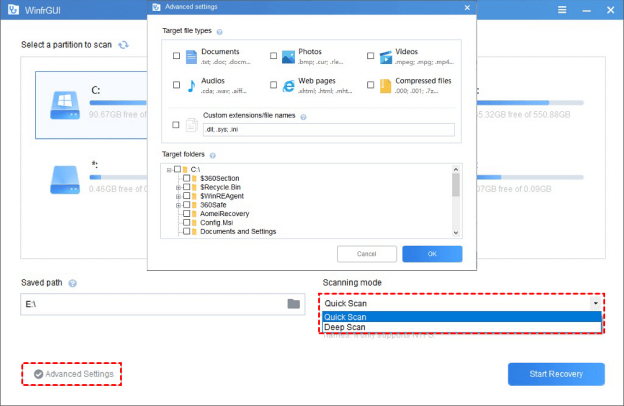
Step 4: After the scan, browse through the list of found files. Preview the files to make sure they are the ones you need. Select the Excel files you want to recover, click Start Recovery, and save them to a different drive to avoid overwriting any existing data.

Now that you know how to use a powerful recovery tool, let’s explore Excel’s built-in features that can help you recover work if you accidentally closed Excel without saving—no extra software needed.
Method2. Recover Unsaved Workbooks in Excel
Excel has a handy feature for restoring unsaved workbooks, which works especially well if you accidentally close a file.
Step 1: Launch Microsoft Excel on your computer.
Step 2: Click File > Open > Recent to see the list of files you’ve worked on recently.
Step 3: Scroll to the bottom of the list and click Recover Unsaved Workbooks. Excel will display all unsaved files.

Step 4: Double-click the file you want to recover. Make any necessary edits and save it immediately to a safe location.
While Excel’s unsaved workbook feature works well, it’s always safer to have backups. Let’s see how to back up your files on Windows and Mac.
Method 3: Backup Excel Files on Windows or Mac
Creating regular backups ensures you won’t lose important data, even if Excel crashes or you accidentally close a file.
Windows Backup
Step 1: Launch the Excel file you want to back up.
Step 2: Click File > Save As, then choose the folder or drive where you want to store the backup.
Step 3: In the Save As dialog, click Tools > General Options, check Always create backup, and click OK.
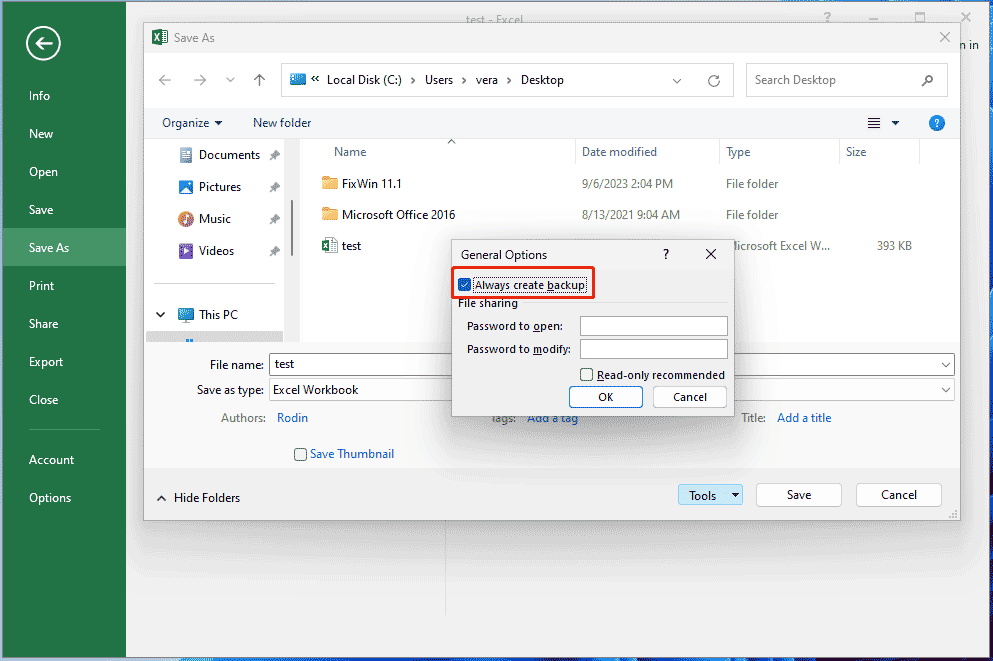
Step 4: Click Save. Excel will now keep a backup copy each time you save, ensuring previous versions are preserved.
Mac Backup (iCloud)
Step 1: Log into iCloud.com and go to iCloud Drive.
Step 2: Drag and drop your Excel file into iCloud Drive.
Step 3: Check that the file appears in iCloud Drive to confirm it’s backed up.
Step 4: If you use OneDrive or Dropbox, upload the file similarly to create an additional backup.
Backups are essential, but to really minimize data loss, Excel’s AutoSave and AutoRecover features can keep your work protected in real-time.
Method 4: Enable AutoSave and AutoRecover
AutoSave and AutoRecover are built-in features that automatically save your work and allow you to recover files if something goes wrong.
Step 1: Launch Excel and go to File > Options.
Step 2: Access Save Settings. Select Save from the left sidebar.
Step 3: Check Save AutoRecover information every X minutes and Keep the latest version if I close without saving.
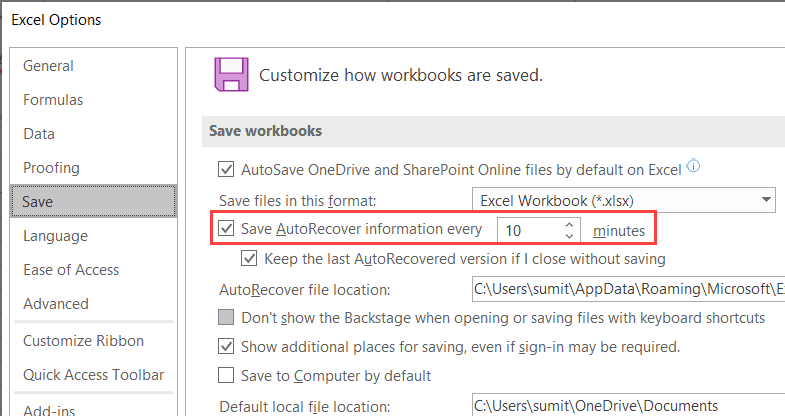
Step 4: Set how often Excel saves temporary copies (e.g., every 5–10 minutes).
Step 5: Turn on AutoSave. If your Excel version has an AutoSave button in the top-left corner, make sure it’s turned on. This continuously saves changes to OneDrive or SharePoint.
With these features enabled, you can significantly reduce the chance of losing unsaved Excel files.
Excel Troubleshooting FAQ:
Q1: How can I open a closed Excel file without saving it?
Go to File > Open > Recent, scroll down, and click Recover Unsaved Workbooks. Select your file from the list and save it immediately.
Q2: Where are unsaved Excel files stored?
Unsaved files are usually in:C:\Users\<YourUsername>\AppData\Local\Microsoft\Office\UnsavedFiles
You can access this folder to find and restore files manually.
Q3: How do I enable AutoRecover in Excel?
Go to File > Options > Save, then check Save AutoRecover information every X minutes and Keep the last AutoRecovered version if I close without saving. Adjust the interval as needed.
Q4: How do I turn on AutoSave for real-time protection?
If your Excel version has an AutoSave button in the top-left corner, turn it on. Files saved to OneDrive or SharePoint will update automatically.
Q5: How can I avoid losing unsaved files in the future?
Use AutoSave and AutoRecover features, regularly create backups, and save files to cloud storage or external drives.
Q6: Can I recover files after Excel crashes?
Yes. When Excel restarts after a crash, it usually shows Document Recovery on the left panel. Open the available files and save them immediately.
Conclusion
Forgetting to save Excel files or accidentally closed Excel without saving can be frustrating, but there are reliable ways to recover your work. In this article, we cover multiple methods, including using WinfrGUI and Excel’s built-in unsaved workbook features. We also explain how to back up Excel files on both Windows and Mac systems. Enabling AutoSave and AutoRecover further reduces the risk of losing unsaved work. By following these steps, you can safeguard your important data and minimize stress. WinfrGUI is a user-friendly and powerful Excel file recovery tool that helps you quickly restore lost or accidentally closed files with just a few clicks.
🔗 More Tutorials:
 MyRecover
 FoneTool
