
[2025 Update]How to Restore Deleted Files Windows 11


Accidentally deleted an important file on your Windows 11 PC? Don’t worry—you might still be able to get it back. Whether you emptied the Recycle Bin too soon or used Shift+Delete without thinking, this guide will walk you through multiple ways to restore deleted files in Windows 11. From quick Recycle Bin recovery to advanced methods like File History and command-line tools, Windows 11 offers several built-in and third-party solutions for getting your data back. Plus, we’ll introduce a free and beginner-friendly recovery tool called WinfrGUI, which simplifies the process for all skill levels. No matter how the file was lost—accidental deletion, formatting, or system errors—this guide will help you choose the best method to recover it. Let’s dive in and bring your lost files back from the digital graveyard.
Method 1: Restore Deleted Files Windows 11 from Recycle Bin
The Recycle Bin is your first stop when trying to restore deleted files in Windows 11. When you delete a file using the Delete key or right-click > Delete, it’s not removed permanently—it goes to the Recycle Bin, where it stays until manually emptied or overwritten. To restore a file:
Step 1: Double-click the Recycle Bin icon on your desktop.
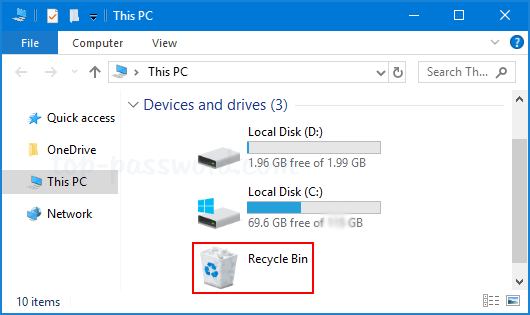
Step 2: Look through the list of deleted items or use the search bar to find your file.
Step 3: Right-click the file and choose Restore. The file will be returned to its original folder.
You can also select multiple files by holding down Ctrl or Shift, then restore them in bulk.
For additional control, use the Manage tab at the top of the Recycle Bin window. From there, you can choose “Restore all items” or “Restore the selected items.”
Tip: This method works great for recently deleted files, but note that files deleted using Shift+Delete or from removable drives won’t appear in the Recycle Bin. If that’s your case, check out our guide on 3 Top Methods to Restore Permanently Deleted Files Windows 11.
Method 2: Restore Deleted Files Windows 11 with WinfrGUI
If your files were permanently deleted—bypassing the Recycle Bin—WinfrGUI is one of the most effective tools to restore deleted files in Windows 11. Based on Microsoft’s Windows File Recovery command-line tool, WinfrGUI adds a clean, user-friendly interface that anyone can use—no coding required. Here’s how it works:
Step 1: Download and install WinfrGUI from its official website.
Step 2: Launch the program and choose the drive or partition where your file was deleted.
Step 3: Click Scan to begin the recovery process.
Key Functions of WinfrGUI:
- Deep & Quick Scan Modes: Choose between fast recovery or thorough scanning based on how long ago the file was deleted.
- File Type Filtering: Narrow down results by file extension (e.g., .docx, .jpg, .mp4) to quickly find exactly what you’re looking for.
- Organized Results: Recovered files are automatically sorted into folders like “Deleted Files” and “Other Missing Files” for easy browsing.
- Search & Filter Options: Use keywords or file names to locate lost data fast—even from large drives.
- Wide Device Compatibility: Supports recovery from HDDs, SSDs, USB drives, SD cards, cameras, and more.
- One-Click Recovery: Restore your files in just one click. No technical knowledge needed.
- And the best part? It’s 100% free. If you want a safe, simple, and efficient way to restore deleted files Windows 11, WinfrGUI is the tool you can trust.
Once the scan completes, you’ll see folders like Deleted Files and Other Missing Files. Use the Filter tool or search bar to quickly locate the file you need. Once found, select it and click Recover.
Important: Always save recovered files to a different location than where they were deleted to avoid data overwriting. WinfrGUI supports recovery from HDDs, SSDs, USB drives, SD cards, and more. It’s ideal for users of all experience levels and is completely free. If you’re looking for a simple, powerful, and safe way to restore deleted files Windows 11, WinfrGUI is a top choice.
Method 3: Recover Deleted Files in Windows 11 Using File History
Windows 11 includes a handy built-in backup tool called File History that can help you restore previous versions of your files—even if they’ve been deleted. It’s especially useful if you frequently back up to an external drive or network location. Here’s how to use File History to restore deleted files in Windows 11:
Step 1: Connect the external drive that holds your File History backups.
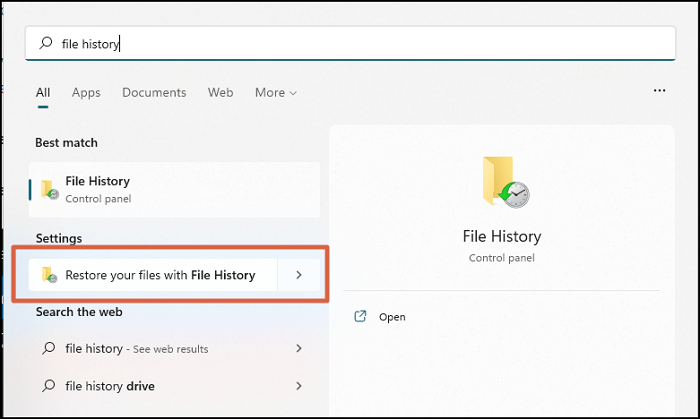
Step 2: Open the Control Panel and search for File History.
Step 3: Click “Restore your files with File History.”
Step 4: Browse through your backups to find the file or folder you want to recover.
Step 5: Select the file and click the Restore button to recover it to its original location.
If the original folder no longer exists, Windows will prompt you to choose a new location. You can also restore earlier versions of a file by right-clicking it > Properties > Previous Versions, if File History is enabled.
Note: This method is ideal for users who’ve lost data from key folders like Documents, Pictures, Music, or Desktop. However, it only works if File History was set up before the deletion occurred. To better understand how to track and manage recently deleted files, check out our detailed guide: How to See Recently Deleted Files on Windows: 7 Easy Tips. To avoid future data loss, consider enabling File History now—it’s a reliable safeguard to help restore deleted files Windows 11 users often overlook.
Method 4: Restore Deleted Files Windows 11 via Windows File Recovery
For advanced users, Microsoft provides a powerful but complex tool called Windows File Recovery, a command-line utility that can recover deleted files from various drives—even after permanent deletion. It’s available for Windows 10 version 2004 and later, including Windows 11. To restore deleted files Windows 11 using Windows File Recovery:
Step 1: Download the Windows File Recovery app from the Microsoft Store.
Step 2: Open Command Prompt as Administrator.
Step 3: Use the following syntax to initiate recovery: bash winfr C: D:\RecoveredFiles /regular /n \Users\YourName\Documents\file.txt
- Replace
C:with the source drive. - Replace
D:\RecoveredFileswith the recovery destination. - Modify the file path as needed.
There are two recovery modes:
- Regular Mode: For recently deleted files on healthy NTFS drives.
- Extensive Mode: For formatted drives or corrupted file systems.
Tips: Avoid using the same drive to save recovered files. Use wildcards (e.g., *.docx) to target file types during recovery. While powerful, this method can be intimidating for non-tech users. If you’re not comfortable using CMD, a simpler tool like WinfrGUI offers similar results with a point-and-click interface. Still, for tech-savvy users, Windows File Recovery is a reliable way to restore deleted files Windows 11 without third-party tools.
Restore Deleted Files Windows 11 FAQ
If you still have questions about recovering deleted files in Windows 11, please refer to the following Frequently Asked Questions:
Q1: Are there permanently deleted files in Windows 11?
No. When you delete a file, it is not permanently lost. The deleted file usually goes to the repository, and even if you remove a storage bag or a file to escape, it can still be found with the help of data recovery software.
Q2: How to recover permanently deleted files in Windows 11?
To permanently recover deleted files in Windows 11, you can follow the steps given earlier.
Q3: How to recover permanently deleted files in Windows 11 using CMD?
You can use CMD with Windows File Recovery to permanently recover deleted files in Windows 11. Start CMD and enter the Winfr command to start the data recovery process. However, please note that this tool is suitable for more advanced users, as incorrect commands can lead to additional data loss. It is recommended to use user-friendly recovery software such as WinfrGUI for convenience and security.
Q4: Can I recover files deleted from an external drive on Windows 11?
Yes, you can recover deleted files from external drives like USB flash drives, SD cards, and external HDDs or SSDs on Windows 11. However, deleted files from these devices typically do not go to the Recycle Bin. To restore them, you’ll need to use data recovery software such as WinfrGUI, which supports external storage recovery and allows you to scan the specific drive and restore files easily.
Q5: What should I avoid doing after deleting files in Windows 11?
To improve your chances of successfully recovering deleted files in Windows 11, avoid writing new data to the drive where the file was deleted. This means don’t install new apps, save new files, or even browse heavily, as it can overwrite the deleted data. Instead, run a recovery tool like WinfrGUI or Windows File Recovery as soon as possible to scan and recover the lost files before they are permanently overwritten.
Conclusion
Losing important files can feel like a nightmare, but with the right steps, it’s often possible to restore deleted files in Windows 11. Whether you’re recovering from the Recycle Bin, using File History, or running powerful tools like WinfrGUI or Windows File Recovery, each method provides a pathway back to your data. If your files were permanently deleted, acting quickly is key—avoid using the same drive to prevent overwriting. For most users, WinfrGUI is the easiest and safest option thanks to its clear interface and deep scanning capabilities. In short, don’t give up when a file goes missing. With this guide, you’re equipped to recover it using trusted tools and techniques tailored for Windows 11. Bookmark this page—you never know when you might need to restore deleted files Windows 11 again.
🔗 Also Read: Recover Permanently Deleted Files Windows 10 Using CMD
 MyRecover
 FoneTool
