
Recover RAW Partition Without Losing Data [2025 Guide]

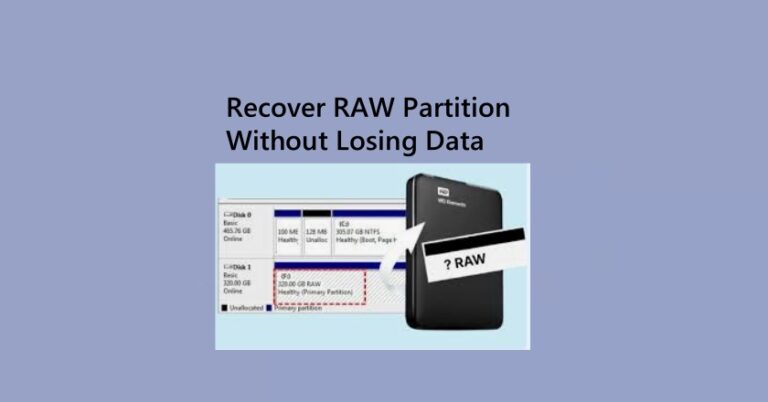
Have you plugged in your hard drive or USB, only to find that Windows says it’s RAW and demands you format it before use? Don’t panic—you’re not alone, and you’re not out of options. Many users ask: “Can I recover RAW partition without losing data?” The answer is yes, and this 2025 guide will show you exactly how to do it safely. In this article, we’ll explain what causes a RAW partition, why formatting is a bad first move, and the most effective methods (including WinfrGUI) to recover a RAW partition without losing data.
Can You Recover a RAW Partition Without Formatting It?
Yes, absolutely—and in many cases, it’s the best thing you can do. A RAW partition usually means the file system has become corrupted or unreadable, but your actual files may still be intact beneath the surface. That’s why it’s critical not to format the drive, even if Windows prompts you to. Formatting can overwrite your existing data and make recovery much harder—or even impossible.
Expert Tip: If you haven’t added new files to the RAW drive, your chances of a full recovery are pretty high. Just use reliable recovery software to scan the partition before doing anything else.
What Is a RAW Partition?
A RAW partition is what happens when your drive’s file system—like NTFS, FAT32, or exFAT—gets corrupted, unreadable, or completely goes missing. When this occurs, Windows doesn’t know how to access the data anymore, so it labels the partition as “RAW.” You’ll typically see scary-looking messages like:
- “You need to format the disk before you can use it.”
- “The volume does not contain a recognized file system.”
At that point, the drive won’t open, and all your files seem to have vanished. But here’s the good news: the files themselves often aren’t gone—they’re just trapped behind a broken file system. Think of it like a book with ripped-out page numbers—the content is still there, but your system doesn’t know how to read it. That’s why it’s important not to format the drive right away. With the right recovery tools, you can often get everything back.
What Causes a Partition to Become RAW?
A partition usually turns RAW when something goes wrong with the file system, making it unreadable by your computer. It might feel sudden, but it often traces back to one of these common issues:
- You unplugged a USB or external drive without safely ejecting it
- The power went out or your system crashed while the drive was in use
- A virus or malware damaged the partition structure
- Something interrupted a format or partition resize process
- The drive is just getting old and has developed bad sectors
Knowing what triggered the issue can help you figure out the safest way to get your data back. The good news? In most cases, your files are still there—they’re just hidden from view.
Way 1. Use WinfrGUI to Recover RAW Partition
If you’re dealing with a RAW partition, WinfrGUI is one of the easiest and most effective recovery tools out there. It’s completely free and provides a friendly graphical interface built on top of Microsoft’s Windows File Recovery command-line tool. This means you get the power of a professional tool without needing to mess around with complicated commands—perfect for beginners and experienced users alike.
Main Functions of WinfrGUI:
- Recover files from RAW, deleted, or formatted partitions
- Support for NTFS, FAT, exFAT file systems
- Quick Scan and Deep Scan modes for different levels of recovery
- File filtering by type, such as documents, videos, images, etc.
- Preview before recovery, so you know what you’re getting back
- Support for internal/external hard drives, SSDs, USB drives, and SD cards
How to Recover RAW Partition with WinfrGUI:
Step 1. Download the latest version of WinfrGUI below or from the official website
Step 2. Launch the tool and select the RAW drive under “Source Drive.”
Step 3. Choose a recovery mode (Quick Scan or Deep Scan).
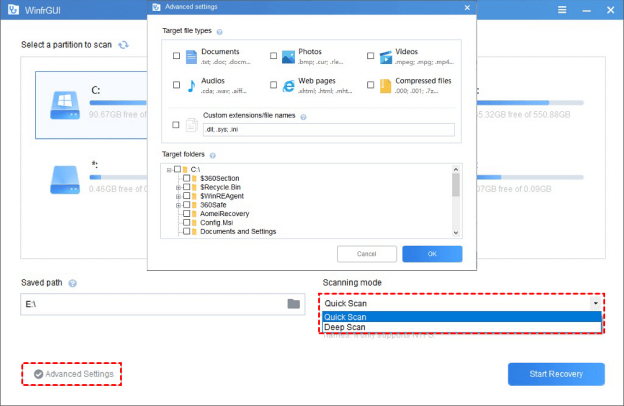
Step 4. Set a destination for recovered files.
Step 5. Click Start Recovery and wait for results.
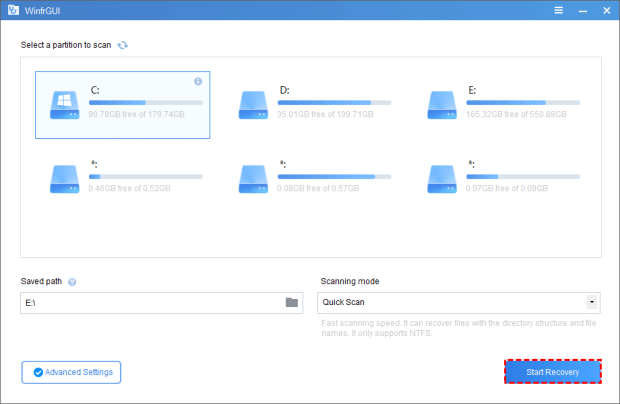
Once completed, you can preview and restore files without touching the RAW partition itself.
Way 2. Try CHKDSK (Cautiously)
CHKDSK isn’t exactly a recovery tool, but it can sometimes fix minor file system errors that cause a partition to appear RAW. To try it, open Command Prompt and type:
chkdsk X: /f
Replace “X” with your RAW drive’s letter.
Avoid using the /r option on RAW drives, as it forces a deeper repair that can overwrite data and lead to permanent loss. If CHKDSK succeeds, your partition might become accessible again—without needing to format. Just proceed cautiously!
Way 3. Advanced Option: TestDisk
TestDisk is a powerful, free recovery tool geared toward users comfortable with technical utilities. It’s especially useful when your RAW partition issues stem from damaged partition tables or corrupted boot sectors. With TestDisk, you can:
- Rebuild damaged or corrupted partition tables that prevent your drive from being recognized properly
- Recover lost or deleted partitions that have disappeared from your system
- Repair boot sectors to fix issues that stop your drive from mounting correctly
While TestDisk doesn’t have a graphical interface like WinfrGUI and requires some command-line navigation, it’s incredibly effective when used correctly. If you’re comfortable with more advanced tools, TestDisk can be a lifesaver for tricky RAW partition problems.
What Not to Do — And When to Call a Professional
First things first: ❌ don’t format your RAW partition before attempting data recovery. Formatting can overwrite your lost files, making them much harder—or even impossible—to recover. Also, avoid saving or writing any new data to the drive to prevent accidental overwrites. ⚠️ Be cautious with free recovery tools that don’t offer file previews or have low success rates—they might do more harm than good.
When should you consider professional help? If your drive is making strange clicking noises, you’ve tried multiple recovery tools without success, or you need a near-100% guarantee (for critical business or irreplaceable data), it’s time to reach out to a professional data recovery service. They have the advanced tools and expertise to handle tough cases safely.a recovery service. They can handle severe physical damage and complex file loss scenarios.
Frequent Asked Questions to Recover RAW Partition
Q1. What does it mean when a partition is RAW?
It means the file system is corrupted or missing, so Windows can’t read the partition or access the data, even though the files might still be there.
Q2. Is it safe to format a RAW partition?
Formatting erases the file system and overwrites data, making recovery harder or impossible. Avoid formatting until you’ve tried to recover your files with proper software.
Q3. Can CHKDSK fix a RAW drive?
CHKDSK with /f might fix minor errors, but /r is risky—it scans for bad sectors and can overwrite recoverable data. Use CHKDSK cautiously on RAW drives.
Q4. Is WinfrGUI better than Windows File Recovery?
Yes. WinfrGUI offers the same recovery power but with a simple, user-friendly interface, avoiding complicated command lines, making it ideal for beginners.
Q5. How do I know if recovery is possible?
Recovery chances are high if you haven’t formatted or written new data to the RAW partition since it became inaccessible. Avoid using or saving files to the drive to prevent overwriting and increasing the risk of permanent data loss.
Conclusion
A RAW partition can be scary, but it doesn’t mean your data is lost forever. Often, the problem is just a corrupted file system hiding your files, not deleting them. The most important thing is not to format the drive or save anything new to it, as this can overwrite your valuable data. With the right approach, you can recover your files safely and effectively. For most users, tools like WinfrGUI offer a simple, user-friendly way to scan and restore data without technical headaches. For more advanced users, TestDisk provides powerful options to repair damaged partitions and recover lost data. In some cases, cautiously using tools like CHKDSK might help fix minor errors—but always be careful. Remember, acting quickly and using the proper tools can make all the difference. And once you’ve recovered your data, don’t forget to back it up regularly to avoid future headaches!
🔗 Also Read: Recovery Partition Missing Windows 10? Simple Fixes [2025]
 MyRecover
 FoneTool
