
How to Open Password Protected ZIP File Without the Password

Forgetting the password to a ZIP file can be incredibly frustrating—like locking yourself out of your own digital safe. Maybe it’s an old archive you zipped years ago, or a file someone shared without remembering the code. Either way, you’re not alone. Thousands of users run into this problem every year. The good news? There are safe, ethical, and legal ways to try unlocking your ZIP archive. In this guide, we’ll walk you through the most effective methods to open a password-protected ZIP file in 2025, from built-in system tricks to third-party tools. We’ll also show you how a free utility like WinfrGUI can help if the ZIP file was accidentally deleted or corrupted in the process. Whether you’re dealing with personal files, work archives, or old backups, these tips will help you regain access without risking your data—or breaking any rules. Let’s get your files back where they belong.
How ZIP File Protection Really Works
ZIP encryption scrambles file contents so that, without the correct password, the data remains unreadable. When you enter a pasEver wonder why opening a password-protected ZIP feels like trying to break into a digital vault?
What Really Happens When You Set a ZIP Password
When you apply a password to a ZIP archive, the utility doesn’t just “lock” the file—it encrypts the contents. This encryption scrambles the data using an algorithm (typically AES-256 in modern ZIPs), making the files inside completely unreadable without the correct password. When you enter the right password, it creates a decryption key that unlocks the files. No password = no key = no access. Here’s the silver lining: even if you forget the password, your files haven’t been deleted—they’re just locked. They remain intact inside the ZIP, waiting to be opened. Modern ZIP encryption, especially when using AES, is tough to crack. Each file is encrypted individually, which improves security. If you forget the password, you’re typically left with two options:
- Brute-force attacks (trying every possible combo)
- Dictionary attacks (trying common passwords or your own wordlist)
The stronger and longer the password, the longer these attacks take. If your ZIP file was recently lost or deleted, and you recovered it using tools like WinfrGUI, be careful—any new data you save might overwrite the encrypted ZIP, making recovery impossible. So the sooner you act, the better your chances of successful recovery or cracking.
Methods to Open a Password-Protected ZIP File Without the Password
So, you’ve run into a locked ZIP archive and can’t remember the password? Don’t worry — you’re not out of options yet. Here are a few methods that can help you regain access to your files, depending on your situation.
Method 1: Use Password Recovery Tools
If you’re trying to figure out how to open a password-protected ZIP file without the password, your best bet is to use a password recovery tool. These programs don’t “guess” your password in the traditional sense—they systematically test potential passwords using well-established methods. And depending on how complex your original password was, they may be surprisingly effective.
✅ Dictionary Attack: Quick If You Remember Part of the Password
A dictionary attack works by cycling through a pre-defined list of likely passwords—these could include commonly used words, phrases, keyboard patterns, or even passwords you’ve used in the past.
- Why it works: Many people use real words or slight variations (like “Password123”) that are easy to crack this way.
- Custom wordlists help: If you have a hunch—like it’s based on your pet’s name, birth year, or a favorite phrase—you can build your own custom list to speed things up dramatically.
- Best for: Short, memorable passwords or those based on personal habits.
✅ Brute-Force Attack: Guaranteed (Eventually)
Brute-force is the most thorough—but slowest—approach. It tests every possible combination of characters until it finds the correct one.
- How it works: The tool tries “a,” then “b,” then “aa,” then “ab,” and so on… until it eventually hits the right combo.
- When it’s worth it: If the password is short (say, 4–6 characters), brute-force can work in minutes or hours. But for longer passwords with mixed characters, this could take days—or even weeks.
- Big downside: Time. Passwords with symbols, uppercase letters, and longer lengths dramatically increase the time needed to crack.
Popular tools for both methods include John the Ripper, fcrackzip, and ZIP Password Recovery by PassFab or iSunshare.
Method 2: Try WinfrGUI (for Corrupted ZIPs)
If the problem isn’t the password — but rather that the ZIP file won’t open due to corruption — then traditional password recovery tools won’t be of much help. This is where WinfrGUI, a free Windows file recovery tool, comes in handy. Instead of trying to guess a password, WinfrGUI focuses on repairing and recovering damaged or unreadable files, including ZIP archives that are broken or partially overwritten.
✅ When Should You Use WinfrGUI?
- You accidentally deleted or formatted the ZIP archive, and now it’s missing.
- You’re seeing CRC errors, archive read failures, or partial extraction problems when trying to open the file.
- You’ve already tried password-cracking tools, but now suspect the file itself is corrupted, not just locked.
- The ZIP was stored on a USB drive, external hard drive, or SD card that might have become damaged.
✅ How WinfrGUI Helps You Recover Damaged ZIP Files
- Deep Scan Technology: WinfrGUI scans your drive sector-by-sector to find and rebuild fragments of the corrupted ZIP file, increasing the chance of recovering usable content even if the archive won’t fully open.
- No Tech Skills Required: Its interface is clean, visual, and beginner-friendly — no command lines or complex setups needed.
- Works Across Devices: Whether the file was saved on an SSD, HDD, memory card, or USB stick, WinfrGUI can access and analyze the drive for recovery.
- File-Type Targeting: You can filter the scan to focus specifically on
.zipfiles, saving time and improving results.
Install and run WinfrGUI from a separate drive than the one your ZIP file is on — this reduces the risk of overwriting the sectors that contain recoverable data.
Method 3: Restore from Backups or Previous Versions
Sometimes the easiest and most effective way to access a password-protected ZIP file — especially if you’ve forgotten the password — is to simply restore an earlier version of the file from a backup. If you saved your files regularly or used built-in Windows or cloud-based backup tools, there’s a good chance you can recover a copy before the password was ever set.
✅ Option 1: Use Windows File History (If Enabled)
Windows File History automatically saves previous versions of files if it’s turned on. If you had it running when you created the ZIP file, you might be able to retrieve a clean, unprotected version.
Here’s how to check and restore:
Step 1: Navigate to the folder where your ZIP file was originally stored.
Step 2: Right-click the folder and select “Restore previous versions.”
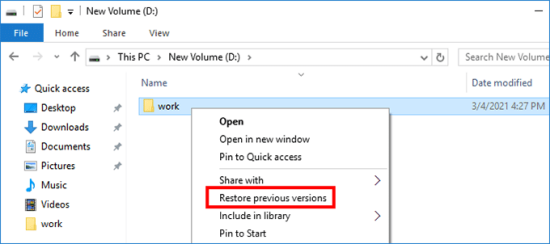
Step 3: Browse the list of available snapshots and select a version from before the password was applied.
Step 4: Click Restore to recover the older version — no password required.
✅ Option 2: Check Your Cloud or External Backups
If you’ve ever saved your files to a cloud service or an external drive, now is the time to look. Where to check:
- Google Drive / OneDrive / Dropbox: Look for your ZIP archive and browse the version history, if available.
- External hard drives or USBs: Open the backup folders and check for an unencrypted version of the archive.
- Backup software (like Acronis, Macrium Reflect, or Windows Backup): Use the recovery interface to locate older versions.
Make it a habit to back up unencrypted versions of critical files before applying any password — this simple step can save you from major recovery headaches later.
Software Solutions for ZIP Password Recovery
When it comes to unlocking a password-protected ZIP file, there’s no one-size-fits-all tool. Each option has its strengths and limitations depending on your technical comfort level, budget, and urgency. Here’s a closer look at some of the most widely used tools and their recovery methods:
| Tool | Method | Pros | Cons |
|---|---|---|---|
| John the Ripper | Brute-force or dictionary attack | Open-source, highly customizable for advanced users | Requires command-line experience and manual configuration |
| Hashcat | Dictionary, brute-force, or hybrid | Exceptionally fast with GPU acceleration, ideal for short passwords | Steeper learning curve, requires a compatible GPU setup |
| PassFab for ZIP (Paid) | Brute-force, dictionary, and mask attacks | User-friendly interface with guided setup, no technical skills needed | Paid license required after trial; some features locked behind paywall |
Industry Insight: Independent performance tests show that tools like Hashcat can crack short, simple passwords (e.g., six characters) in under an hour using a modern GPU. However, for passwords over 12 characters—especially those containing random symbols—brute-force recovery becomes increasingly time-consuming and often impractical.
Free vs. Paid Software: Which Is Right for You
When it comes to unlocking a password-protected ZIP file, both free and paid tools have their place—but the best choice depends on your experience level, urgency, and budget.
Free Tools (e.g., John the Ripper, WinfrGUI)
- ✔️Pros: Free tools are great if you’re comfortable with technology and have the patience to work through more manual steps. They offer flexibility, are widely supported by online communities, and work well for straightforward recovery tasks.
- ❌Cons: However, they often come with a steeper learning curve. Command-line interfaces, slower recovery speeds, and a lack of official support can be barriers—especially when dealing with large archives or complex passwords.
Paid Tools (e.g., PassFab for ZIP, Elcomsoft Archive Password Recovery)
- ✔️Pros: Paid options shine when you need speed and simplicity. These tools typically offer user-friendly interfaces, step-by-step guidance, faster processing with GPU support, and responsive customer service.
- ❌Cons: The downside? They can be expensive, particularly if you only need them once. Some free trials may also limit what you can actually recover before requiring a purchase.
If you’re not in a rush and have some tech know-how, start with free tools first. But if those don’t work—or you need results quickly—paid software can save you time and hassle. 🔗 Related Reading: [ Corrupted ZIP File Repair Online: 4 Best Tools ]
How to Avoid Losing ZIP Passwords in the Future
Q1: I always forget ZIP passwords. What’s the best way to store them safely?
Use a trusted password manager like Bitwarden, 1Password, or LastPass. These apps can generate strong passwords, store them securely, and even autofill when needed—so you never have to remember complex passwords yourself.
Q2: Can I leave a hint to help me remember the password later?
Yes. Many ZIP utilities let you add comments to the archive. You can include a subtle, non-sensitive hint in the comment field—just enough to jog your memory later without giving away the full password.
Q3: What if I lose access to the password entirely—any backup options?
Always keep an unencrypted copy of your most important ZIP archives stored separately—either in a cloud service like Google Drive or on an external hard drive. That way, if you forget the password, you’ll still have access to the original files.
Q4: Are there tools that can help me recover forgotten passwords?
Yes—there are password recovery tools like John the Ripper and PassFab for ZIP. But they can be time-consuming or require technical skills. Prevention is always easier than recovery.
Conclusion
Opening a password-protected ZIP file without the password may seem daunting, but it’s not impossible. With the right tools and methods, you can recover your data, whether through password recovery tools, WinfrGUI for damaged files, or restoring from backups. Always remember to follow ethical and legal recovery methods to ensure the safety of your data. Next time you forget a ZIP password, take a deep breath—there’s always a way to open password-protected ZIP files and recover what you need!
🔗 Also Read: Online Zip File Password Recovery
 MyRecover
 FoneTool
